
The Digital Arena: How Big Data is shaping the Fan Experience

Technology has seen a massive growth especially in the modern and dynamic world and today sports and technology can go hand in hand. Perhaps, the most influential factor in this context is Big Data. This term refers to the huge amount of structured, unstructured data being created every day for business insights to be derived. Big Data plays an increasingly significant role in the field of sports as the fans are experiencing sports in a completely new way. Starting with individual interactions all the way up to the levels of engagement, the application of Big Data is transformative for the fans.
Understanding Big Data in Sports
However, to decipher how Big Data is revolutionizing the fans’ experience it is necessary to know what is in this nomenclature. Big Data encompasses data from numerous entities including social media, ticket sales, merchandise, athletes’ performance data and real time data from games. This is not only big data that hail from various sources and in different forms and formats. This is the case where the challenge and opportunity begun since raw data needs to be analyzed in order to come up with valuable information.
Sports collected information from fans within multiple touch-points, these are social media interactions, purchase behavior and even biometrics from wearable devices. What IF this information is tapped, teams and leagues can make the experience more appealing for the fans.
Enhancing Fan Engagement
First and most prominently among the benefits of the application of Big Data in football advocacy is the element of engagement bolster. The possibilities of interacting with the fans are now countless for the sports franchises, and other similar businesses. For instance, analyzing data about fans, the teams can effectively advertise and foster their audience’s engagement with product or service.
Personalized Marketing: Data enables the identification of the various categories of fans including the demographic, a fan’s purchase behavior, and levels of activity. Such a segmentation thus helps teams act as marketing teams, giving fans materials they are most likely to be interested in, for example, events, merchandise, and promotions. For instance, if a fan has been buying a t-shirt several times for a certain player then they can be targeted with offers involving the same player’s products.
Social Media Interaction: As we are aware, social media sites are other instrumental source of data on fans’ sentiments and preferences. Fans can engage on these platforms with their feedbacks over games, players and events hence can be used by teams to monitor fans’ response. Therefore, fans talk about issues that teams can respond to, discuss or create content that is related to such issues to foster a two-way communication system. It establishes a development of the two-way interaction with the goal of enhancing a feeling of community and belonging amongst fans.

Creating Memorable Experiences
Another use of Big Data is to give fan attending the game memorable experiences. From this integration of technology in stadiums, teams can improve that experience by harnessing data.
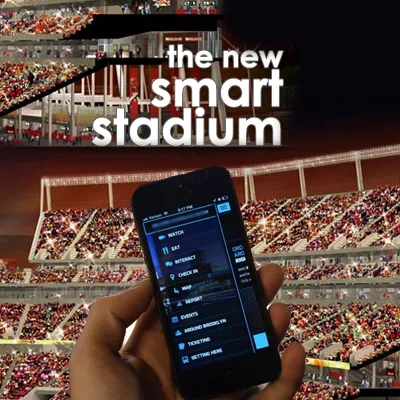
Smart Stadiums: Today’s stadiums are dotted with technology that can capture data and connect individuals in real time. Mobile applications include service delivery of various products like foods, directions to your seats, and even the time your washroom is likely to be free. Based on the identified characteristics of the movement of fans and their actions on the stands, functional zones in the stadium and services can be arranged to avoid crowds and improve access.
Interactive Elements: Technology such as augmented reality (AR) and virtual reality (VR) is also being integrated in to the sports more often. Some ideas which can be worked out by the teams are the entertaining of the fans through virtual platforms before, during or after the match. For instance, through AR applications fans are able to access other statistics, replays or even three dimensional models of the player sitting right on the stands. It is entertaining, but it educates fans and makes the game more interesting, and thus the development of this interactive technology.
Data-Driven Decision Making
Big Data is not only relevant when it comes to fan relations but also has a role in the strategic thinking of sport organizations. Squads are also in a position to assess player statistics to ensure they make the right decisions about training, hiring, and on the field tactics. These facts increase the probability of success and maintain teams’ competitiveness according to the data analysis.
Performance Analysis: Both coaches and managers also employ data analytics to analyze current player’s performances. With the help of such numeric data as speed, shot accuracy and defensive actions it is possible to evaluate performance and detect the need in certain training. It will further be noted that the use of the data-driven model of analysis goes hand in hand with improved individual and team performance.
Injury Prevention: Another important aspect of Big Data in sports is learning about injuries. Teams can in one way or the other get to know the health and performance of its players so that they can relate with their games and get to know whether the players are at high risk of getting injured. Smart clothes and sophisticated display systems can monitor some indices, including heart rate, muscle stress, and level of fatigue. From this work, teams will have timely information on which they will avoid further workloads that can lead to many injuries among the players.
Fan Loyalty Programs
Big Data is also useful in generating and enriching fan loyalty schemes. Knowledge about fans helps the teams to design programs that both incentivize loyalty as well as generate income.
Customized Loyalty Programs: In this case, based on purchasing behavior and attendance records, loyalties should be designed, which match with the fans. In particular, if a fan attends games often, then he or she will be presented with a chance to go through certain pre-game events or to get a certain percentage off on purchases of merchandise. This kind of personalization ensure that fans feel as they are part of the team and should continue supporting it.
Gamification of Fan Experiences: Most sports organizations are now including aspects of the game in their loyalty schemes. They then get a chance to earn points for attending games, buying jerseys or even interacting on the team’s social media pages. These points can then be exchanged for rewards for example a coupon that offered by the store or an invitee to some special event. All in all, this method of applying games within platforms deepens the commitment the fans have to their teams, as well as fosters repeat involvement.

Challenges and Ethical Considerations
As mentioned above, Big Data comes with myriad opportunities, but it also has its drawbacks and several ethical issues that ply coded to the sports organizations. Security issues are big because it is crucial that people’s confidential information is not used inappropriately if gathered or analyzed.
Data Privacy: The audience is more conscious of its data handling, thus organizations’ actions should be more open regarding data handling. Concerning the data collected, used and protected, the fans need to be informed clearly on these issues. Maintaining security is also effective in order to protect important data from being leaked by hackers.
Data Overload: One of the challenges is that the amount of data to be collected is vast. With such detail, different data needs to be selected as well as the manner in which the selected data is interpreted. Narrowing the data scope turns out critical in identifying the aspects that will lead to improvement of the fans’ experience yet exclude extraneous data that can cause decision paralysis. This is important to avoid being overloaded by lots of information that is not fundamental when trying to make decisions that will improve the fan experience.
The Future of Fan Experience
That exciting as it was, the impact of Big Data for fans’ experience is only going to become even more paramount in the future. In the future as we continue to make improvements on the technology aspect, teams will have better data analytical tools and methods.
AI and Machine Learning: Combining artificial intelligence AI, and machine learning with data analysis will help sports organizations to get better penetration and forecasts regarding the fans. Most of these technologies can review performance information to predict external trends meaning the teams can use them to formulate strategies for more engagement and revenue production.
Virtual Fan Experiences: Today, remote viewing is becoming more natural, so teams may pay special attention to improving the virtual fan experience. Through virtual reality, fans can watch games from the comfort of their homes through events that can make the stadium feel as if they are in the stadium. The shift could increase the accessibility of the sports organizations and get the attention of fans who are not able to get to our games.
Conclusion
In conclusion, it can be said that today Big Data has influence the fan experience in digital environment maximally. The impact is wide ranging and spans, but it is not limited to, targeted communication with fans, engagement, and the overall management of data, and improvements to the game-day experience. Some of the issues that cannot be overlooked include invasion of privacy and reliability issues of too much data. This is however a golden opportunity for creating concise and suitable connection opportunities for the teams and their fans. Thus, the further development of technology will lead to even more elaborate, original and exciting experience for fans of sport all over the world.
 Media Pack Download
 Newsletters
 Industrial Events