
The Use of Drones for Security and Event Management in Large Sports Venues
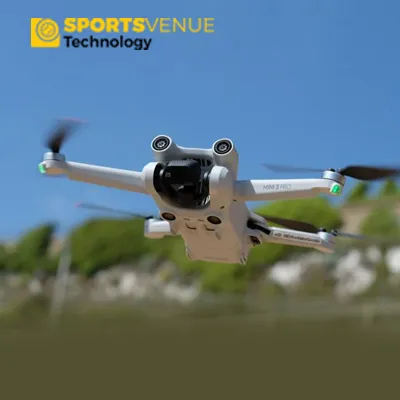
In recent past, security and safety has been enhanced by the use of drones in different operational fields, especially in security. Huge sports facilities where thousands of fans, athletes, and workers convene are continually adopting drone for security purposes and efficiency. This article presents relevant benefits that can be derived from drone technology as a surveillance tool, security measure, and crowd enhancement tool during sports events.
1. Improved Surveillance and Crowd Management
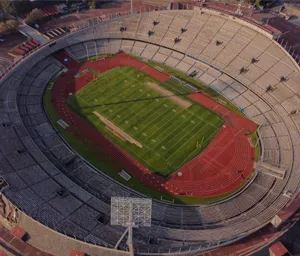
Drones are effective in capturing big pictures of the sporting fields and facilities making it easier for the security teams to monitor the large fields in real-time. In the past, security officers would need to patrol or even use stationary cameras, this may not capture every area in a large stadium or amphitheater. While conventional cameras require manual operation through a complex wired rigging system, drones can cover the venue, flying and recording high definition videos from various directions.
This real time aerial surveillance assist in detecting possible security threats including overcrowding, indecorous conduct, objects left behind thus indicating that security threat is dynamic. It also helps in tracking the movement of group of people and thus assist the organizers of events to avoid incidences such as formation of bottlenecks or performance of crowd stampedes.
2. Enhanced Security and Threat Detection
Security personnel on the ground may not be able to identify threats on an organization’s premise especially when they are disguised; however, drones that are fitted with high power sensors and cameras can do this. For instance, thermal imaging sensors can detect heat signatures that represent areas with guns or some other unusual behavior. Face identification technology is also applicable to drone platforms to detect targeted or restricted persons, violating a given facility’s access.
In emergencies like a security threat, or a fire incident, drones offer the security teams a quick way of evaluating the situation for appropriate action to be taken. They can work in the sections which are difficult and which can be extremely hazardous for human personnel to get access in regions like on the roof of the stadium or dense areas of the venue.
3. Emergency Response and Medical Assistance
Drones help emergency response teams during sports events. To alleviate the problem of delivering timely assistance and care to victims, emergency response teams require support from drones.
For instance, in case one of the fans passes out in the stand, drones are also adept at delivering medical necessities, or an Automated External Defibrillator (AED). This rapid response can be very vital. It can, for example, save a life in large capacity building, if it is one medical team that is inside the compound and is trying to access the scene, through thick crowds.
Furthermore, drones can also stream footage in real time to the first responders enhancing their vision of what is actually going on the scene. This assists them to put in place items of necessity that can facilitate their response to disasters hence shortening time required during disaster response.
4. Traffic and Parking Management
Large stadia create a significant traffic issue; as a case in demonstrating tens of thousands of spectators entering or exiting the venue simultaneously. Drones can assist by monitoring traffic patterns and providing real-time updates to traffic management teams.
Flying above parking lots and around roads, drones can also detect overcrowded areas and offer possibility to change a route for fans. This aids in dealing with recurrent traffic congestion and makes it possible for enthusiast s to find their way in and out of the exercising hall. Drones can also ensure security by helping monitor parked cars thereby cutting off risks of car theft or damage.
|
Also Read: Leveraging AI, Facial Recognition, and Drones in Sports Venues |
5. Cost-Effective and Efficient Operations
Drones are cheaper than employing the regular methods of monitoring crowds and managing them in special events. Things such as hiring a lot of security officers or fixing many cameras may end up being costly and sometimes time-consuming process. Conversely, drones are relatively cheaper and can be deployed very easily.
After drones are in the air, they can sweep sizable portions of the venue quickly, something security and management teams would benefit from. This also helps in minimizing the strength that is required to be posted throughout sections of the stadium and do other important work.
6. Privacy and Safety Concerns
However, as this form of technology has a several of advantages, the negative factors which can be observed are privacy and safety issues.
Audiences may feel uneasy like knowing that they are being monitored from a bird’s eye view especially when they have chains that include drones that have facial recognition abilities. Organizers of events need to disclose the necessity of the utilization of drones and recognize the laws and regulations of the country presently in affair with respects to data acquisition and monitoring.
It can also be embarrassing when drones develop some mechanical issues and/or fall off and injure some people on the ground. To avoid this the operators of the drones must be well trained on how to go about the business, and the drones themselves should be checked over from time to time lest technical problems will be encountered.
Conclusion
Application of UAVs for security and standards in large sports facilities that host crowds has provided new technologies for overseeing events, security, and crises. In this way, drones are improving safety, threat identification, and traffic flow in order to produce better sports events. It may be further seen that, in the future too, the use of drones would provide solutions to the various problems faced by large venues in event management as technology progresses steadily into the future. But before we fully endorse the use of drones, privacy and security issues need to be discussed in order to maximize the advantages of drones in the fans’ experience.
 Media Pack Download
 Newsletters
 Industrial Events