

Innovations in Sports Equipment: Materials, Smart Tech, and Athlete Performance
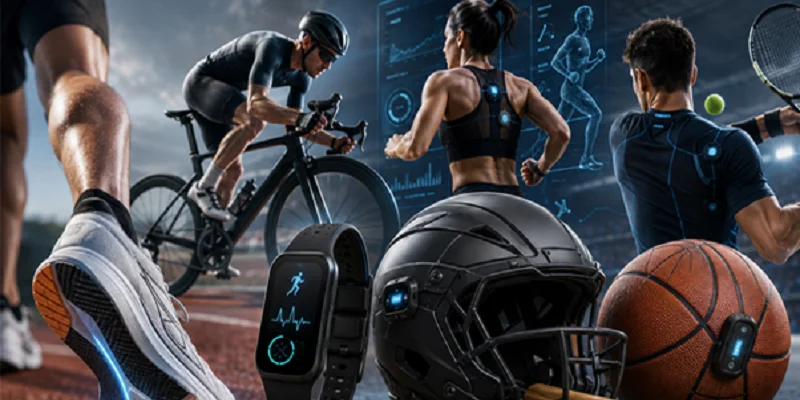
Sport hasn't looked the same in years, but most people notice it only in flashes — a marathoner shattering a personal best, a cyclist shaving seconds off a climb, a helmet that somehow feels lighter than it should. Behind each of those moments sits a quieter story: years of research into sports equipment innovations that are steadily rewriting what's possible in athletic performance.
From carbon-fiber composites to AI-powered wearables, the gear athletes use has become a performance variable in its own right. This article breaks down the major forces behind this transformation: new materials, smart technology, and the data-driven feedback loops now baked into everyday training and competition.
Why Sports Equipment Innovation Matters Now
For most of sporting history, equipment changed slowly. A tennis racket in 1980 wasn't wildly different from one in 1960. That's no longer true. Sports technology has accelerated on two fronts simultaneously — materials science and digital electronics — and the overlap between them has created an entirely new category: equipment that doesn't just support performance, it actively measures, adjusts, and improves it.
Three forces are driving this acceleration:
- Consumer demand for measurable progress. Athletes at every level now expect data, not guesswork.
- Injury prevention research. Better materials and sensors reduce impact-related injuries.
- Competitive margins. In professional sport, fractions of a second or millimeters of precision decide outcomes, so even small equipment gains matter enormously.
Advanced Materials for Sports Equipment
The biggest quiet revolution in sport has happened at the material level. Advanced materials for sports equipment have replaced traditional wood, steel, and basic rubber with engineered composites that are lighter, stronger, and more responsive.
Carbon Fiber and Composite Layering
Carbon fiber remains the standout material across cycling, running, and racket sports. It offers an exceptional strength-to-weight ratio, letting manufacturers build frames, blades, and soles that flex precisely where needed and stay rigid everywhere else. Running shoe midsoles now often include carbon-fiber plates that act like a spring, returning energy with every stride.
Advanced Foams and Energy Return
Modern foam compounds, such as proprietary polyurethane and TPU-based blends, are engineered at the molecular level to maximize energy return while minimizing weight. This is a major reason marathon times have dropped so sharply over the past several years — the equipment itself now contributes to propulsion rather than just cushioning impact.
Smart Textiles and Adaptive Fabrics
Fabric technology has moved beyond moisture-wicking. Compression garments now use graduated weave patterns that support muscle groups during exertion, while some fabrics incorporate phase-change materials that regulate body temperature by absorbing and releasing heat as needed.
Sustainable and Bio-Based Materials
An emerging trend worth watching is the shift toward recycled ocean plastics, plant-based foams, and biodegradable composites. Brands are under growing pressure to prove that performance gains don't come at an unsustainable environmental cost, and newer material science is proving that durability and eco-consciousness aren't mutually exclusive.
Smart Sports Equipment: The Rise of Connected Gear
If materials science solved the "how strong and light can this be" question, smart sports equipment is solving "how do we make this equipment think." Sensors, Bluetooth connectivity, and embedded microchips have turned ordinary gear into performance-tracking tools.
Connected Footwear
Smart insoles and shoes now measure ground contact time, stride length, cadence, and pronation in real time, syncing that data directly to a smartphone app. This lets runners fine-tune form without needing a lab-based gait analysis.
Smart Balls and Bats
In sports like baseball, cricket, and basketball, embedded sensors inside balls and bats capture swing speed, launch angle, spin rate, and impact force. Coaches use this data to correct mechanics that used to be judged only by eye.
Wearable Performance Trackers
Beyond generic fitness trackers, sport-specific wearables now measure heart rate variability, muscle oxygen saturation, and even hydration levels. These metrics feed into recovery recommendations, helping athletes avoid overtraining before it becomes an injury.
Smart Protective Gear
Helmets in football, cycling, and hockey increasingly include impact sensors that detect the force and location of a hit, alerting medical staff instantly if a concussion risk threshold is crossed. This is one of the clearest examples of smart sports equipment solutions directly protecting athlete health rather than just enhancing performance.
Innovative Sports Equipment Technologies Changing Training
Training environments themselves have become smarter, extending the innovation beyond individual pieces of gear into full ecosystems.
AI-Powered Coaching Tools
Computer vision systems can now analyze an athlete's movement on video and compare it against biomechanically ideal models, flagging inefficiencies a human eye might miss. This kind of feedback used to require expensive lab equipment; now it runs on a smartphone camera.
Motion Capture and Biomechanical Feedback
Wearable motion sensors track joint angles and force distribution during a lift, swing, or jump. Combined with AI analysis, this data helps athletes correct micro-inefficiencies that accumulate into injury risk or lost performance over a season.
Virtual and Augmented Reality Training
VR headsets now simulate game scenarios for quarterbacks, goalkeepers, and batters, allowing repetition-based decision training without physical wear on the body. This is especially valuable during injury recovery, when physical practice must be limited but mental reps still matter.
Adaptive Resistance Equipment
Strength equipment increasingly uses digital resistance systems that adjust load in real time based on an athlete's power output, rather than relying on fixed weight plates. This allows training programs to auto-calibrate to daily readiness levels.
Sports Equipment for Athlete Performance: The Direct Impact
All of this innovation ultimately serves one goal: improving how an athlete performs and recovers. Sports equipment for athlete performance now works across three key dimensions.
Efficiency — Lighter materials and better energy return mean athletes expend less effort for the same output, whether that's a sprinter's stride or a cyclist's pedal stroke.
Precision — Sensor-driven feedback removes guesswork from technique correction, shortening the learning curve for skill development.
Recovery and longevity — Smart wearables and impact-sensing gear catch problems early, helping athletes train harder without accumulating injury risk that shortens careers.
The result is a feedback loop: better equipment produces better data, better data produces better training decisions, and better training decisions extend performance windows and reduce downtime.
Latest Innovations in Sports Equipment and Smart Technologies
Looking at where the field is heading, a few trends stand out as the next wave of the latest innovations in sports equipment and smart technologies:
- AI-personalized gear — Equipment manufacturers are experimenting with 3D-printed shoes and pads custom-fitted to an individual's foot scan or body shape, produced on demand.
- Self-adjusting equipment — Ski bindings, bike suspension, and even racket string tension are beginning to adjust automatically based on real-time conditions or sensor feedback.
- Biometric integration at the fabric level — Clothing embedded with sensors that read muscle activation and fatigue without any separate wearable device.
- Predictive injury analytics — Combining wearable data with AI models to flag injury risk days before symptoms appear, rather than after an athlete already feels pain.
- Sustainable smart materials — Combining eco-friendly composites with embedded sensors, so performance tech and environmental responsibility develop together rather than as separate tracks.
How Smart Sports Equipment Technologies Are Transforming Athletic Performance
The broader theme across all these developments is a shift from equipment as a passive tool to equipment as an active performance partner. Smart sports equipment technologies transforming athletic performance isn't a future prediction — it's already visible in professional leagues, Olympic training centers, and increasingly, consumer-level gear available to weekend athletes.
This democratization matters. Technology that was once exclusive to elite national training programs — motion sensors, AI video analysis, advanced composite materials — is now available in mid-range running shoes, home gym equipment, and mobile apps. That accessibility is arguably the most significant innovation of all: performance tools once reserved for professionals are now shaping how everyday athletes train, recover, and compete.
Frequently Asked Questions
What are the biggest innovations in sports equipment today?
The most significant innovations include carbon-fiber composites for lighter, stronger gear, sensor-embedded smart equipment for real-time performance tracking, AI-driven biomechanical analysis, and advanced foams that improve energy return in footwear.
How does smart sports equipment improve athletic performance?
Smart equipment collects real-time data on speed, force, form, and biomechanics, allowing athletes and coaches to identify inefficiencies and correct them faster than traditional observation-based coaching alone.
Are advanced sports materials only for professional athletes?
No. Many advanced materials and smart technologies, once exclusive to elite sport, are now built into consumer-level equipment such as running shoes, wearables, and home training tools.
Can smart sports equipment help prevent injuries?
Yes. Sensor-based protective gear, motion tracking, and predictive analytics can flag risky movement patterns or impact forces before they lead to serious injury, supporting earlier intervention.
What's next in sports technology innovation?
Expect more personalized, AI-customized equipment, self-adjusting gear that responds to real-time conditions, and deeper integration between sustainable materials and embedded smart sensors.
Final Thoughts
The story of modern sport is increasingly a story of engineering. Sports equipment innovations built from advanced materials and smart technology aren't replacing athletic talent — they're amplifying it, giving athletes clearer feedback, safer gear, and more efficient tools to reach their full potential. As materials science and digital sensing continue to converge, the line between "equipment" and "coach" will keep blurring, and the athletes who benefit most will be the ones who understand how to use this new generation of gear as a genuine performance partner.
 Media Pack Download
 Newsletters
 Industrial Events