
How Sports Venues are Utilizing Social Media Integration?
In the contemporary social site usage, social media is not just a communication tool personal but it has steadily worked its way to business and organizational practices including sports facilities. A few sports venues have considered the prospects of social media as communication instrument, publicity platform, and platform for interaction. Thus, social media adoption procedures make it possible to enhance fans experience at sports venues through such aspects as social interaction. This paper aims at identifying how many of the sports venues have implemented the usage of social media for various purposes improving fans’ experience and impacting business outcomes.
1. Building a Connected Community
Of course, the pivotal aspect of integration of social networks is the possibility of creating a feeling of people togetherness. Sports venues hang official social media handles on the Facebook, Twitter, Instagram, and TikTok to the fans. These platforms enable the venues to post new, information about their events and their respective teams and other materials.
Therefore, when the venues continuously participate in a conversation, they get to foster the existence of an active community online. Consumers are engage by the use of like, share and comment buttons. From this point of view, this interaction leads to creation of a bond or loyalty associated with fanship with the venue and hence the events that are hosted. Also, social media is a way through which fans express themselves, and from their expressions, venues get to know the sentiments of fans and enhance their products.
2. Real-Time Engagement during Events
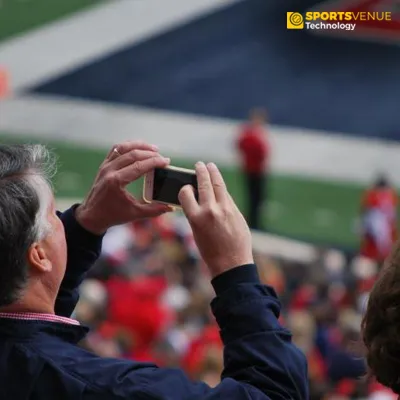
Social media is least suited for real time scenarios and is particularly effective during live events. Stadiums for instance use Twitter and Instagram feeds to relay moments, inform fans in the stadium and those at home.
Most arenas compel their guests to share their pictures and moments using unique event tags. It not only making the fan engaged to the show but also provide feeling of co-viewing or is a co-watching brand. Television screens all around the venue can simultaneously include posts from social networks, giving an atmosphere of excitement to fans. This way not only increases interest but also can be used to advertise for subsequent events by giving a preview of the atmosphere of the location.
3. Promoting Events and Special Offers
Any outdoor sports venue must necessarily go through promotion and social media forms the most ideal tool for this. At ease, the venues can share information about the games, concerts, and special events through other materials such as graphic icons, videos or countdowns.
| Also Read: Sports and Social Media: How Digital Platforms are changing the Game |
On the social media platform, venues can leverage anticipation to its fan base simply by announcing the event. A follower can be informed from such channels of a discount on ticket prices in the venue as well as special sales before the same is made public, thus encouraging such followers to interact with the venue. Also, the select promotional techniques allow for the targeting of the potential attendees, making it easier to market promotions that are certain to get positive responses.
4. Gathering Fan Feedback and Insights
Another important process of social media integration lies in the opportunity to collect the opinions of fans. For fan insights, the sports venues can conduct polls, surveys and even include questions with open-ended on their social media accounts in order to get views of fans regarding certain issues like food, place to sit or even time of the event.
This feedback is useful when planning future events and helps to make sure that the attendees of these events are satisfied. When fans read that their comment have been taken into consideration and something is being done about it, then are encouraged to come again. Further, when venues switch respondents on and participate in the conversations with fans, consumers are aware of this and appreciate that places are genuinely concerned with them and interested in improving the experience.
5. Creating Interactive Experiences
There is a trend that stadiums and sport facilities put emphasis on various forms of interaction in social networks with spectators. Promotions such as contest, gifts offering and challenge makes the fans to be more active in their support.
For instance, venues may require the fans to comment maximum of three moments from previous events or to post images of the ongoing event on social media using given event hash tag for stand a chance to win items like tickets and merchandise. This not only increases the success rate of engagement but also creates organic marketing content that the venue could implement. Also, there is a trend of using augmented reality (AR) elements in social networks where fans can watch the virtual tour or play in an interactive game that will only deepen the visit.
6. Cross-Promotion with Teams and Sponsors
It is important to utilize other players for one to reach the maximum results of social media. Stadiums and playing fields often align themselves with the teams that use their location and the sponsors of the teams to increase the official social media sites. It turns that cross-promotion is also beneficial for the venues, since it lets them expand their potential audience and attract more people’s attention.
For instance, if one localized team is to host an important match, the venue will post information about it in its page, and the reverse holds for the team regarding the upcoming events at the venue. It not only extends the horizons of fans, but also fills in the gaps in the audience and contributes to the formation of a single brand image for the location and the teams. Also, in relation to events, the sponsors can use social media as a marketing tool where they place promos or contests in relation to the venue and /or the product to be sold.
7. Engaging Content Creation
The issue with social media integration in sports venues depends heavily on the content that fans find interesting. This entails creation of quality images, engaging videos and quality posts that spell out the mood of the fans and feelings attached to the events.
Information that presumably can be released only on the Internet and is related to reports of players, tours of facilities, preparation for events develops the fans’ relation to the venue. Creative storytelling can also prove beneficial in creating contents, as the venues post stories about the history of the venue, moments, and fan experiences. Not only is interesting content riveting to the readers’ eyes, but it is shared with networks, hence promoting the venue.
8. Enhancing Customer Service
Social media platform has been embraced by sports venues as an important customer service. This begs the athlete’s fans to seek information concerning tickets, event, and amenities within the facility on the social media platform. Thus, live venue fan inquiries can likewise be beneficial where venues can attend to and improve the customer experiences of fans.

Timely and effective replies to the questions or issues raised stand a good chance of making the interaction positive by encouraging loyalty. Social media also enhances the basic communication between venue and fans because it avails real time updates on issues like change of event schedules and safety measures.
9. Measuring Success through Analytics
In order to evaluate the effectiveness of social media marketing campaigns sports venues employ analytic source that reflect the quantity of the engaged audience as well as the demographics of this audience. Taking a look at post-performance, fans’ response, and ticket sales the venues can consider aspects that the audiences appreciate.
These analytics determine the future course of action enabling venues to adjust their content and engagement methods. For example, if particular formats of posts such as behind the scenes videos receive high engagement, venues can concentrate more on items like these to increase engagement. Increased awareness of the audience preferences is beneficial when developing the proper social media tactics for the venues.
10. Adapting to Trends and Innovations
The world of social media grows so dynamically and sports venues should not lag behind new tendencies and solutions. This ranges from the ability to adopt new means of reaching out, experimentation, the use of new methods such as virtual reality and responding to the shifting time preferences of the audience. For instance, there was a huge increase in short-form video content, so venues developed fast and relatable clips suitable for social media such as TikTok and Instagram Reels.
This way and being ready to try innovative things sports venues can preserve fans’ interest and improve their experiences.
Conclusion
Thus, one can sum up the successful incorporation of social media networks into the sports facilities, which influenced the new kind of fans’ attendance. Connecting and engaging with fans in real time promoting events, gathering feedback or creating experiences are important ways venues can take the fan experience to the next level and benefit business outcomes. Social media integration with teams and sponsors and captivating content creation and enhanced customer services takes the meanings of social media integration a notch higher.
Technological advancements can disrupt the sports venue business model as venues must update their operations using the insights provided by the analytics to tweak the methods they use and incorporating the emerging trends to retain fans. Lastly, the objective is to ensure that the fans are appreciated, committed and eager, to take part in any events, which the course, gathers them. Indeed, having social media at their disposal, sports venues are fully prepared to develop long-term engagement with target fans and guarantee a bright future for live sports and entertainment.
 Media Pack Download
 Newsletters
 Industrial Events