

Top 10 Sports Shaping the Global Economy: A Look at the Financial Powerhouses in Sports

Within the vast universe of entertainment and international business, sports have ceased to be simple competition and today represent the economic powerhouses. Sports have become modern day powerhouses that benefit the economy; their best arenas no longer only revolve around athleticism as the world has now seen them as multimillion and even multibillion dollar operations whose strategies dictate financial aspects, city planning, international politics, and demand. However, what then is the economic impact of sport and to what extent can these games be said to be engaged in world markets?
Let us examine the leading sports that dictate the economy in pieces to understand the way they supply the growth of sports industry, stimulate media revenues, modify the exchange patterns, and affect global financial transfers. Continuing reading below, you will reveal the trends in sports economy, which shift not only the way we spectate, play, but also transact business among nations.
The Intersection of Sports and Economics: A Global Phenomenon
Sport activities are no longer local. They have become transnational powers with stadium scale incomes and continental fans. Rights to broadcast and merchandise, ticket sales, event sponsorship, and international travel are all examples of the expansion of the sports industry's revenue that either directly or indirectly boost each nation's GDP.
It is more than just the excitement of a sporting event that follows its influence on world economy. It enters real estate, hospitality, transport, media and even fintech. International events such as the Olympics or the FIFA world cup temporarily make an economy their pulse as millions of dollars are poured into any tourist related activity bringing thousands of new jobs.
To gain a real appreciation of what sports can mean to world economy, it would be crucial to appreciate which sports would play the dominant role in the economic narrative and why.
1. Football (Soccer): The Undisputed Titan of the Sports Economy

When it comes to the most lucrative sports, there is no doubt that football will be right on the top of the list, or soccer depending on the region where you are. It is an international language that is practiced throughout the continents with billions of fans and unsurpassed ratings.
The worldwide appeal of football is one of the biggest factors driving the sports industry's ability to resell its earnings.
A survey done by Deloitte reported that the 20 leading football teams made more than 9 billion Euros in 2024 alone. The most lucrative sporting leagues such as English Premier League, La Liga, and UEFA Champions League are not only sporting events but financial spectacles in the world.
The economic aspects of football can also be observed in transfer markets where the record-breaking prices are paid to purchase players or sellers bring record prices to their transfers, and the merchandising various clubs such as Manchester United and the Real Madrid bring in millions through the sale of jerseys and souvenirs. The influence of the sports in the world economy is well represented by the fact that the number of emerging economies invests into football infrastructure in order to utilize its economic potential.
2. American Football: The Powerhouse of Domestic Dominance

Although the American football audience might be regarded as a U.S-centric one, it cannot be underscored as being economically powerful. National Football League (NFL) is one of the most lucrative sport league ranked in the world, with over a revenue of above 18 billion dollars as the countdown reaches 2023.
A major factor in the growth of the American sports sector is American football with mega broadcasting contracts, Super Bowl advertisement, and fantasies. The trends in the sports economy here point to a more immersive fan experience using AR and VR to monetize the engagement even more.
NFL organizations are economic giants. The franchise of Dallas Cowboys is priced and worth more than 9 billion so it is clearly evident that a specific sport can contribute to sports fueling economy on a global level, but all this is done based in a local setting.
3. Basketball: A Slam Dunk for International Appeal

Having players turn into world celebrities and games spreading to more than 200 countries, basketball demonstrates the influence of sports on the global economy in terms of cultural export.
The implications of this cross border impact can be translated to the revenue expansion of the sports industry, not limited to ticketing along with broadcasting, but somehow as well in e-commerce with items, Album of non-functional tokens (NFTs), and span-endorsers.
The trend of marketing in basketball is also close to current tendencies in the sphere of sports economy due to the platform of players. Football players like LeBron James and Steph Curry are more than just athletes; they are brands that influence millions of people to purchase their goods.
4. Cricket: The Financial Pulse of the Subcontinent and Beyond

Cricket, particularly the emergence of the Indian Premier League (IPL) has turned out to be a major player in the economic impact of sports. Even the IPL itself is valued at more than 15 billion, which is constantly on an upward trend. It is one of the most lucrative sports leagues even though it is a comparatively brief arena yearly.
Cricket is the main reason why the sector is expanding in India and other neighboring countries in the Asian region. Major franchise values are skyrocketing, sponsorships are becoming a booming activity, and salaries of the players are commensurable with salaries in European football. Cricket is also slowly influencing international business where brands utilize it as the vehicle to enter the Indian market.
This further promises to be even brighter as it is planned to globalize leagues, expand cricket into the non-traditional regions and make it a formidable force that is global elements in the sports industry that benefits the world economy.
5. Tennis: The Individual Sport with Global Reach

Tennis is a personal game yet its presence around the globe is agreeable. The prestigious tournaments, such as Wimbledon, US Open, and French Open contribute not only to prestige but also to the sports industry revenues rise.
The impact of sports such as tennis in the economy can be best observed in areas such as tourism and hospitality. When a Grand Slam event is staged, cities experience an increase in the number of international visitors, bookings in luxury hotels and local business sales. With athletes such as Novak Djokovic, and Iga Swiatek endorsements and fashion tie-ins also play an important part in sports economy trends.
6. Formula 1: Speeding Up the Sports Economy
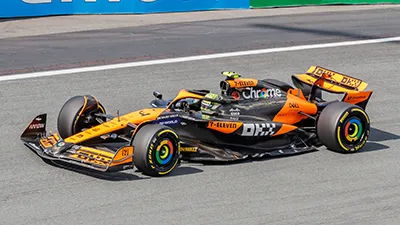
Formula one is a special combination of sport, technology and luxury. It is among the leading sport that influences the economy especially in Europe, the Middle East, and Asia. F1 sparks a local economy with every race as it is run on a global scale that involves different continents.
Its business model is constructed around advertisement and extravagant sponsorships, high echelon hospitality, and broadcasting high-class sporting experience. Its climate innovation initiative is now taking it toward sustainable sports economy direction, thus not only being financially beneficial but also progressive. Even in industries such as automotive R&D, and green technology investments, the economic impact of F1 is being felt.
7. Baseball: A Traditional Sport with Steady Revenue

The Major League Baseball (MLB) is not as global powerhouse as football or basketball but it is one of the most lucrative sports locally. It boasts a strong tradition, long seasons and following that makes its revenue predictable.
Baseball has been used in shaping the sports with respect to the industry in Americas and Asia. The sport is experiencing the new investments in data-driven approach as well, following the new trends in sports economics with the development of analytics.
It ran its business stability in relation to the broader context of sports leading the way forward to the economy of the world particularly in the niche merchandising and local broadcasting.
8. Golf: Precision Meets Profit

The Masters, PGA Championship, and Open competitions are the main events in golf, which is another sport that is a key part of the sports economy trend. The demographic of the sport is more affluent and it catches high value sponsorships and luxury advertisers.
The economic role of golf is varied- it affects the housing market by creating golf-courses etc. and can affect the tourism industry by creating destination golf. The contribution of the sports to the global economy in this case is mostly silent but very effective in the upper economic levels.
9. Mixed Martial Arts (MMA): The New-Age Contender

Also, organized sports topographies have been challenged over the last few years by MMA, which is spearheaded by the UFC. It is one of the most successful ones when it comes to the increasing fan base and adding new energy to the revenue growth of the sports industry.
Due to its emphasis on pay-per-view business, global fight nights, and the marketing activity based on the use of influencers, MMA reflects some of the most recent trends in sports economy. It is exceedingly strong among the 18-34 age category and hence, an attraction to advertisers and sponsors who want to reach out to young people.
The effects of the sports on the global economy are just beginning to become known and, in this sense, highly promising, especially with regard to digital monetization and lifestyle branding.
10. Esports: The Digital Athlete Revolution
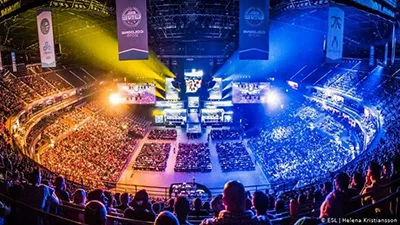
Esports may be an activity beyond the conventional society but its role in boosting the sports industry cannot be ignored. By 2024, global esports revenues had exceeded 3 billion and the recorded compounded annual growth rate was more than 9 percent.
The most interesting thing about esports is that it forms a new understanding of sports itself. International sponsors, in-game content, and digital distribution are its greatest advantages. Esports offers a view into the emerging world of consumer behavior and tech-based connection and engagement - the sports economy of the future - to marketers vying for customers in the Gen Z and Gen Alpha markets.
The ascendancy of esports also points to the normalization of virtual entertainment and remote fandom and the decentralized model of sport, which is having influence on global trade generally in software, hardware and digital payment economies.
Comparative Overview: Market Values and Revenue Streams
In order to provide a snapshot of economic impact of sports, this is a simplistic comparative table offered:
| Sport | Estimated Annual Revenue (2024) | Key Revenue Stream |
| Football | $60+ Billion | Broadcasting, Sponsorships |
| American Football | $18 Billion | Broadcasting, Merchandise |
| Basketball | $15 Billion | Endorsements, Global Licensing |
| Cricket | $10 Billion+ | Franchise Sales, Sponsorships |
| Tennis | $8 Billion | Tourism, Endorsements |
| Formula 1 | $6 Billion | Sponsorships, Tech Licensing |
| Baseball | $10 Billion | Local Broadcasting, Merch |
| Golf | $4 Billion | Sponsorships, Event Hospitality |
| MMA (UFC) | $2 Billion | PPV, Digital Streaming |
| Esports | $3+ Billion | Digital Sales, Sponsorships |
The Future Outlook of Sports in the Global Economy
The trends of the changing sports economy indicate that the next stage of the development of the sports industry is going to be integrating the sphere with technology, sustainability and digitalization. With streaming platforms replacing broadcasting, sports becoming integrated with AI and data science and emerging the new audiences in Africa and Southeast Asia, the market is to extend the established borders.
Finally, the economic effect of sports in the world will only intensify further reaching every aspect of employment creation as well as international relations and commerce through to retail and urban confidentialities.
The bottom line in this highly lovely intertwining is that not only are sports at the top of their economic sphere considered more than games, but also lively ecosystems that showcase the transformational pulse of the economic world we live in.
 Media Pack Download
 Newsletters
 Industrial Events