
Smart Stadium Lighting in 2026: Energy Efficiency, IoT Integration, and Fan Experience
It started as a cost problem. It didn’t stay that way.
Ask most stadium operators why they first looked at upgrading lighting, and the answer is usually simple: electricity bills.
Large venues burn through power. Evening matches, night events, rehearsals, maintenance cycles—lighting runs longer than most people assume. So yes, the initial push toward LED Stadium Lighting was about reducing costs.
But somewhere along the way, the conversation changed.
What began as a cost-saving measure slowly turned into something more layered—efficiency, yes, but also control, data, and surprisingly, even fan experience. That’s how Smart Stadium Lighting Systems entered the picture. Not as a flashy upgrade, but as a practical response to multiple pressures happening at once.
LEDs solved one problem—and exposed another
Switching to LEDs was, in many ways, the obvious move. Compared to older systems, they simply made more sense. Less energy consumption, longer lifespan, better light quality.
But once stadiums installed LED Stadium Lighting, something interesting happened.
They realized they could control light in ways they couldn’t before.
And that’s where expectations started to shift.
Because if you can control lighting—why run everything at full intensity all the time? Why light up empty sections? Why not change according to the event, the time of the day or even weather?
It was here that Energy-Efficient Stadium Lighting ceased to be a matter of hardware and began to be a matter of behavior.
Control systems: not glamorous, but essential
It has a tendency to concentrate on the visible technology, the fixtures, the brightness, the effects. The real work is done behind the scenes, however.
In control systems of stadium lighting, it is not merely a case of light or dark. They’re managing complexity.
Think about a typical week in a large stadium. A match on one day, a rehearsal the next, maybe a concert setup after that. Each scenario needs a different lighting setup.
Instead of reconfiguring things manually every time, operators now rely on pre-set scenes. A few clicks, and the entire lighting environment shifts.
It’s efficient, yes—but more importantly, it removes friction.
And in operations, reducing friction is often more valuable than adding features.
IoT didn’t just connect things—it changed expectations
The introduction of IoT-enabled stadium lighting systems didn’t happen overnight. It crept in gradually—sensors here, remote monitoring there.
But once everything became connected, expectations changed again.
Because now, lighting systems weren’t just controllable—they were responsive.
This is where IoT integration in stadium lighting for connected venues starts to feel less like a technical upgrade and more like a shift in mindset.
Lighting can now react to real conditions:
- A section fills up → brightness increases
- Natural light improves → artificial light reduces
- A fixture behaves oddly → maintenance gets alerted
It’s not dramatic. Most fans won’t notice it happening. But over time, these small adjustments create smoother operations.
That’s essentially what Connected lighting for sports venues is about—not big moments, but consistent refinement.
Energy efficiency is now continuous, not static
Another myth is that when you install efficient lighting, it is all over.
That’s not really how it works anymore.
With Smart stadium lighting solutions, efficiency is something you manage continuously. Systems adjust, learn, and optimize over time.
Instead of asking “Is this system efficient?”, operators are now asking, “Is this system operating efficiently right now?”
That is a little point--yet a big point.
Because energy usage isn’t constant. It fluctuates based on events, attendance, weather, and even broadcast requirements.
And that’s exactly why Energy-Efficient Stadium Lighting now depends as much on software and data as it does on hardware.
Fan experience: the part no one expected
You could have easily elicited a reluctant response had you questioned an operator of a stadium a decade ago on whether lighting influences fan experience.
Nowadays there is no debate about it.
Adaptive lighting systems improving fan experience in stadiums have become part of how venues think about engagement.
Not in an obvious way. Lighting doesn’t replace the game. It doesn’t compete with the action.
But it enhances the environment around it.
Lighting creates a sense of expectation before the event: slight color variations, gradual increases or decreases of intensity. It responds when it matters so that it enhances excitement but is not distracting.
And then, following the incident, it silently shifts to a more practical task- ushering out, controlling traffic, alleviating confusion.
It’s not the star of the show. But it supports everything else.
The entertainment layer is growing—but carefully
There’s also a more visible side to this.
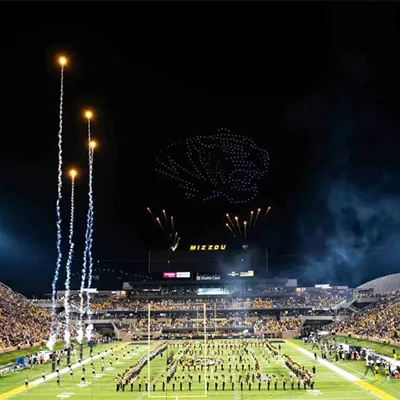
With Advanced LED lighting solutions for modern sports stadiums, venues have started experimenting with dynamic lighting—synchronized effects, team colors, coordinated sequences.
Some stadiums go all in, especially during major events. Others use it more sparingly.
And that balance matters.
Excessive use of lighting can be clumsy since lighting can offer a better experience. The idea is not to make every moment a spectacle, but to select the appropriate moments.
That operators are yet to figure out.
Broadcasting quietly raised the standard
One of the less talked-about drivers behind lighting upgrades is broadcasting.
Contemporary cameras are very delicate. Minor lighting variations, which human eye may not notice, are very clear on screen.
And that is where LED Stadium Lighting and accurate control systems come in.
Even light, constant power, color temperature changeable- these are not merely technical features. They directly affect how an event is perceived by millions watching remotely.
In a way, lighting is now part of the broadcast infrastructure.
Integration: where everything starts to connect
Lighting doesn’t operate alone anymore.
With IoT-enabled stadium lighting, it is becoming more and more integrated into the other components of the stadium ecosystem, including security, digital signage, crowd management, even energy systems.
Here Smart Stadium Lighting Systems begin to prove their worth.
A simple example: during an emergency, lighting can guide people toward exits automatically. No manual intervention needed.
Another: during peak entry times, specific areas can be brightened to improve visibility and flow.
Individually, these are small things. But together, they create a more responsive environment.
It’s not without challenges
For all the advantages, adoption isn’t frictionless.
Cost is the obvious barrier. Upgrading to Smart stadium lighting solutions requires investment, and not every venue can justify it immediately.
Then there’s integration. The retrofitting of older stadiums can be complicated due to the fact that they were not constructed with connectivity in mind.
Cybersecurity is another concern. Once systems are connected, they need protection.
And finally, there’s the learning curve. Teams need time to understand and fully use these systems. Without that, even advanced setups can end up underutilized.
So where does this go next?
Probably toward more automation.
AI-driven adjustments, better predictive maintenance, deeper integration with other systems—it’s all coming, some of it already here.
We’ll also likely see more personalization, especially in premium areas. Lighting tailored to smaller groups, maybe even individual preferences.
Meanwhile, expectations will keep on increasing. What is advanced today will be normal tomorrow.
One last thought
Lighting doesn’t usually get the spotlight in discussions about stadium innovation. It’s not as visible as large screens or as talked about as connectivity.
But it’s one of the few systems that touches almost every part of the stadium experience—operations, sustainability, broadcasting, and yes, even how fans feel inside the venue.
The shift toward Connected lighting for sports venues, supported by Stadium lighting control systems and IoT integration in stadium lighting for connected venues, is happening steadily.
Not loudly. But steadily.
And in many ways, that’s exactly why it matters.
 Media Pack Download
 Newsletters
 Industrial Events