
Leveraging Advanced HVAC Technology for Climate-Controlled Stadiums
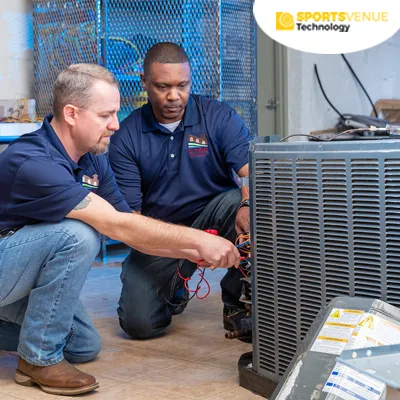
A sports stadium today is not just the place for holding athletic events and championships, but much more. These architectural accomplishments now seek to provide the aura of the game as well as a complete and pleasant viewing by thousands of people who go watch every event. Sports Industry has established a relationship between environmental conditions and fan experience, whether in a hot summer football match or a winter basketball match. Thus, new Heating, Ventilation, and Air Conditioning (HVAC) systems technologies are being used to design self-regulated stadia which bring into focus the best of both worlds, comfort and sustainability.
But as we delve further into how these systems work, then we discover that HVAC technology has now emerged as a crucial technology in the quest to adapt stadium into versatility structures for year-round use for different purposes. But what does it take to put into practice such systems in stadiums? Which kinds of innovations are making this possible? And also, how, on this basis, these systems contribute to the improvement not only of the comfort of the spectators but also the functional and operational management of the stadium? Now, let’s get to these questions interesting to discuss and contemplate.
As we look deeper into how these systems function, it becomes clear that HVAC technology is now playing a pivotal role in transforming stadiums into year-round, multi-purpose arenas. But what does it take to implement such systems in stadiums? What kind of innovations are making this possible? And more importantly, how do these systems enhance not just the comfort of the spectators but also the efficiency and longevity of the stadium itself? Let’s delve into these intriguing questions.
Raising the Bar for Fan Experience
The first question that naturally arises when we discuss HVAC in stadiums is: the following question arises, why is it important to regulate the climate within such gigantic areas? The answer is in the transformation of sports and, therefore, different and various requirements of the spectator’s. Stadiums are no more just arenas for sports; they also serve as places for music performances, business meetings, cultural weeks, and entertainment. Sports fans are now demanding more than just a place to sit and watch a game, or an event. They want a convenient public space where they would wish to spend their time enjoying the event regardless the social climate.
Sophisticated HVAC systems are critical to this transformation as they afford the substructure required to control the climate, moisture and air flows. For instance in a stadium in a region that is characterized by high temperatures and humidity, it is made to cool the air but at the same time supply enough fresh air to make the surrounding air outside a stuffy environment. These systems are designed in colder climates to add warmth.
With the advancement in building and material technology, the ability to create a comfortable environment within a building and to keep this environment constant has become mandatory, not a luxury.
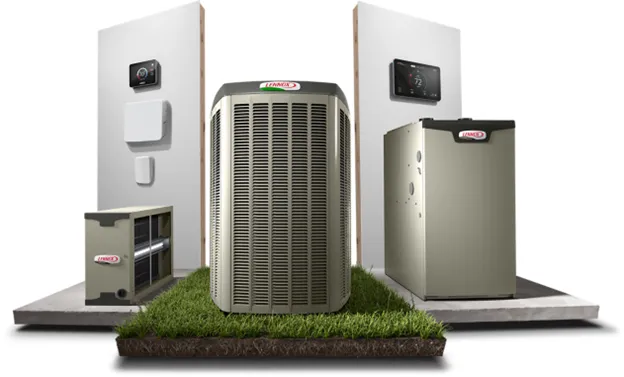
But how do such systems provide such comfort in large open areas where thousands of people are likely to be present? The answer is well hidden in the complexity of a modern HVAC system.
The Rise of Smart HVAC Systems
The conventional HVAC systems are no longer the passive units that served as simple on/off cyclic units designed to regulate temperature. In stadiums, HVAC technology is only continuing to develop to become more intelligent because of the integration of modern sensors and automation. Stadiums now use smart systems that allow them to control the temperature, humidity, and airflow with regard to the actual conditions. For example, smart thermostats, occupancy sensors, as the name suggests, can literally sense how many people are in specific zones of the stadium, so they adjust the climate of the environment using optimal energy consumption.
Some of these sophisticated AC systems can also vary in accordance to the prevailing weather conditions outside. Thus, if the temperature outside rises or falls, the system is able to adjust the climate indoors, thus preserving the thematic variation all across the space. , it should be noted that this area is equally important in the identification of data analytics for predicting and improving the efficiency of HVAC. Hence, applying historical information, the system can predict the changes in temperature and avert any situation to cause inconvenience for fans.
This year another innovative advancement in HVAC technology is the application of artificial intelligence for forecasting the movement of air, identification of a looming problem, and energy management. It also makes it easy for stadium to operate with minimal costs but providing visitors with an excellent experience.
Energy Efficiency and Sustainability
Sustainability has been described by stakeholders as the way forward in the construction and management of the modern day stadiums and heating ventilation and air conditioning systems are part of the solution. Due to large spaces that are characteristic of stadium facilities, it is quite difficult to maintain good levels of energy effectiveness. That is why, modern complex climate systems have introduced numerous vital innovations which contribute to energy management effectiveness and environmental consequences minimization.
One of these solutions is geothermal heating and cooling as a solution to hydraulic fracturing. This is possible since geothermal systems are able to draw its heat from the earth temperature or dump heat into the ground thus making its operation to be far cheaper than that of other HVAC units in the market. These systems can be connected to solar power system or other forms of renewable power base and thus enabling stadiums to cut on their use of their non-renewable power sources.
Further, techniques like variable refrigerant flow (VRF) make it possible for stadiums to provide comfort without being extravagant with energy. VRF systems are indeed very efficient because they employ refrigerant so as to transport heat load, and they can be addressed discretely in various parts of the stadium. This enables the required and accurate measurement of heat control in the various parts of the place since the unnecessary parts do not consume energy.
In addition, to these advances, HVAC systems are also being developed using environmentally friendly raw materials and incorporate energy-saving devices. Energy conservation has not only been an inspiring factor in the management of stadium operations but also assisted in meeting goals of sustainability.
Maintaining Air Quality and Safety
Ambient air is another touchy issue when it comes to climate-controlled stadiums. Since people are confined in areas with tight areas, there is always the risk of polluted air, allergy prone material as well as a high risk of airborne diseases transmission. Now sophisticated HVAC systems are so designed that aside from filtering and cooling the air, it eliminates all germs that are hazardous to spectators.
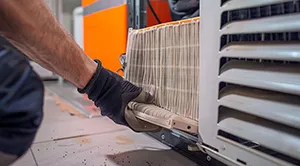
These systems practically utilize High efficiency particulate air (HEPA) filter to filter dust, bacteria and other unhealthy particles in the air. UV-C light technology is also being used to kill air borne pathogens so that do not approaches the fans before being neutralized. Such concentration on this aspect would be rather crucial bearing in mind that during the COVID-19 pandemic, air circulation is vital.
Additionally, with the air quality monitoring systems installed in HVAC technology, it is possible to assess the conditions inside buildings at the same time. When the quality of the air becomes poor, the system is capable of redesigning the ventilation and filter to produce healthy and comfortable air supplies. It also doesn’t only promote the protection of the spectators, but it also guarantees that stadiums will continue to function during emergencies and other strenuous situations.
Challenges and Future Prospects
Consumers still require more information about their HVAC systems because, like any other technology that has made so much progress in as little as a few years, there is still a lot of potential. For example, stadiums, which are uniquely vast and can easily reach hundreds of thousands of visitors, also suffer from inefficient distribution of air across the audience. In the same regard, the systems have to be responsive regardless of the fluctuating occupancy and the external climate.
However, as the technology grows from time to time, therefore, HVAC solutions are also experiencing changes with the new adopting technology. Looking forward, climate-controlled stadiums already seem destined to offer even more to exert greater sophistication like predictive maintenance through AI, fan personal comfort automation, and incorporation of intelligent building functions anticipating the complete enhancement of the fan experience.
Conclusion
It would be impossible to deny the impact of HVAC technology in the mechanization of stadium into climate controlled structures. Not only does it provide comfort to fans but it has a very significant task of making stadium sustainable comfortable energy efficient and healthy for the people.
Since the level of media experiences fans expect rises, the degree of complexity in HVAC systems also rises. They will only get better over time and integrating into ever more complex ways to influence and set new parameters to what is achievable in climate control. Finally, the application of advanced HVAC systems will revolutionize the usage of sporting venues and continue the evolution of entertainment to support new essential facilities year-round. In equipment’s and constructions, when we look to the future, it is hard to imagine how far stadiums which are not only efficiently controlled for climate but also sustainable and creatively constructed can go.
 Media Pack Download
 Newsletters
 Industrial Events