
ESports Arenas vs. Traditional Stadiums: A Look at Technological Innovations
Introduction
The competitive entertainment sector advances at a speed that exceeds human expectations. Historic stadiums have been the sports center for many centuries yet high-tech esports arenas keep appearing at a fast pace for digital competition venues. A compelling question arises to determine which unique technologies make esports arenas different from conventional stadiums. These improvements create fundamental changes that influence both upcoming sports and entertainment functions.
The article provides extensive insight into competitive spaces by studying their modern technological developments in addition to their audience participation and evaluating their possible future directions.
The Evolution of Sports Venues
The evaluation process requires comprehension of the historical development of sports facilities prior to analysis.
Traditional Stadiums: A Legacy of Grand Structures
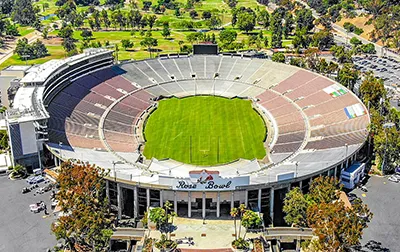
The history of traditional sports stadiums began with ancient Greece and Rome during which the Colosseum functioned as the first configuration for contemporary facilities. Throughout the years stadium builders applied these facilities to support growing audience numbers while improving both seating options and better sound systems alongside enhanced lighting. These facilities exist mainly based on physical resources together with in-person spectator participation.
Esports Arenas: The Rise of Digital Domes
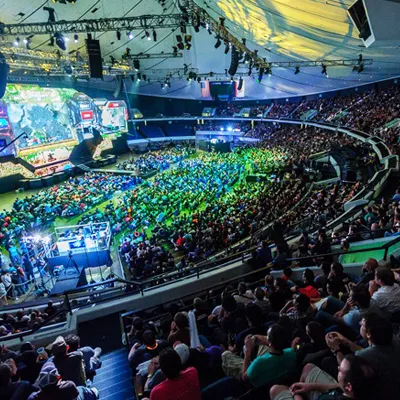
New facilities known as esports arenas came into existence two decades ago to cater exclusively to digital competitions. Sports facilities invest in state-of-the-art digital services as well as fast network systems with customized visual presentation technology that enables crowd interactivity. The arenas operate region-transcending services through their virtual broadcast capabilities and live streaming functions as well as virtual reality accessibility.

Technological Innovations in Traditional Stadiums vs. Esports Arenas
Let’s have an analysis of technology differences between esports arenas along with typical stadiums by examining each distinctive system.
1. Infrastructure & Design
| Feature | Traditional Stadiums | Esports Arenas |
| Seating Capacity | Large, often exceeding 50,000 | Smaller, usually 1,000 - 20,000 |
| Architectural Focus | Physical crowd engagement | Digital infrastructure & display tech |
| Location Dependency | Fixed locations | Can be virtual or hybrid |
Senior facilities put their focus on spacious grandstands as well as large playing surfaces together with tiered seating to enable full stadium visibility of all matches. Esports arenas apply their focus on big LED displays together with modular chair layouts and complete light installations to give intense experiences for audiences located anywhere.
2. Broadcast & Streaming Technologies
- The use of high-definition cameras in television broadcasting remains a staple of traditional stadiums although live streaming implementation continues to slow down.
- Esports facilities provide streaming-focused venues which utilize Twitch together with YouTube Gaming and Facebook Gaming platforms.
- Modern technological devices particularly augmented reality (AR) and virtual reality (VR) allow spectators to experience live events in real-time although they are absent from the event location.
3. Audience Engagement & Interaction
Traditional stadiums engage audiences through:
- The large Jumbotron displays both replays along with updates from the game.
- In-person chants and crowd waves
- The system provides only restricted food delivery and seat acquisition capabilities through mobile applications.
Esports arenas offer:
- The platform links up live chat through facilities provided by Twitch and YouTube together with Discord communities.
- Holographic projections of players and gameplay data
- Audiences gain rewards through gamification features that let them participate in match predictions with voting rights.
4. Player Experience & Performance Analytics
- Traditional sports athletes monitor their performances using fitness trackers and wearing sensors and analyzing video recordings.
- Esports tracks player performance through artificial intelligence analysis combined with body measurement tracking as well as mind enhancement tools to determine fast reaction times alongside decision-making fastness.
5. Economic & Environmental Considerations
| Factor | Traditional Stadiums | Esports Arenas |
| Construction Costs | $1B+ for large venues | $10M - $100M |
| Maintenance Costs | High due to wear & tear | Lower due to digital operations |
| Environmental Impact | Significant (land, resources) | Lower (smaller footprint, energy-efficient tech) |
Buildings used for esports matches need minimal space and materials and green infrastructure for maintenance because esports arenas offer economic efficiency and sustainability to traditional stadiums.
The Future of Sports Venues: A Hybrid Model?
Extrapolating from the great points of traditional stadiums and esports arenas leads toward a hybrid framework which would unite their superior features.
1. Smart Stadiums: Traditional stadiums implement esports technology by installing AR-enhanced fan entertainment and 5G wireless networks and digital ticketing systems among other such features.
2. Virtual Reality Stadiums: Upcoming stadium designs might use virtual reality technology to let spectators experience full engagement from different stadium locations in virtual reality mode.
3. Cross-Industry Collaboration: Traditional stadiums will incorporate advanced display systems to start hosting esports competitions with blendings of digital and physical audience participants.
Conclusion: The Convergence of Physical and Digital Experiences
Traditional stadiums preserve their historical value along with unmatched crowd intensity but esports venues continue to expand digital communication and technology innovations. The combination of these two venue types by the sports and entertainment industry will establish enhanced experiential engagement for worldwide fans.
With advancements in VR, AR, AI-driven analytics, and live-streaming capabilities, one thing is certain - whether it’s a roaring football stadium or an electrified esports arena, technology will continue to shape the way we experience competitive entertainment.
Which experience excites you more - the nostalgia of a physical stadium or the limitless potential of a digital esports arena?
 Media Pack Download
 Newsletters
 Industrial Events