
Designing World-Class Aquatic Centers: Technology, Safety, and Sustainability
Most people only notice a pool facility when something feels off — the air is too thick with chlorine, the deck is slippery, or a lifeguard's chair is angled so they can't actually see half the water. The facilities that get it right rarely draw attention to themselves; they just work. That's no accident. It's the result of deliberate aquatic center design, where architects, engineers, and facility operators work together to balance experience, safety, and long-term operating costs.
Whether you're a municipality planning a new community pool, a school district upgrading an aging natatorium, or a developer building a resort amenity, the standards for what makes a great aquatic facility have shifted dramatically in the last decade. Today's best aquatic facilities aren't just built to hold water — they're built to manage energy, protect swimmers with smart monitoring, and adapt to decades of changing use. Let's walk through what actually separates a forgettable pool from a world-class one.
Why Aquatic Center Design Matters More Than Ever
Pools are expensive to build and even more expensive to run. A poorly designed facility can bleed money for thirty years through inefficient HVAC systems, chemical waste, and constant maintenance headaches. A well-designed one, on the other hand, becomes a community asset that pays for itself in usage, membership retention, and reduced long-term liability.
Good aquatic center design starts long before construction — it starts with understanding who will use the space. A competitive swim facility has completely different requirements than a family leisure center or a therapy pool for rehabilitation patients. Water depth, lane configuration, deck space, sightlines for lifeguards, and even acoustics all need to be planned around actual use cases, not generic templates.
Architects increasingly work backward from operations. Instead of asking "how do we make this look impressive," the better question is "how will a lifeguard supervise this space during a birthday party with forty kids in the water?" That operational lens is what turns a beautiful rendering into a facility that actually functions.
Modern Aquatic Center Design: What's Changed
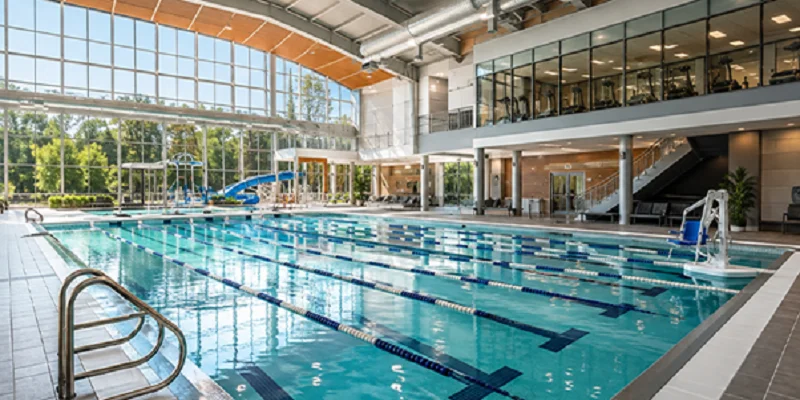
Modern aquatic center design has moved away from the boxy, windowless natatoriums of the 1980s and 90s. Today's facilities favor natural light, open sightlines, and flexible zoning that lets a single building serve multiple purposes throughout the day — lap swimming in the morning, therapy sessions midday, and recreational swim in the evening.
Some of the biggest shifts in modern design include:
- Moveable bulkheads and floors that let one pool basin transform from a shallow instructional space to a deep competition tank in minutes.
- Zoned mechanical systems so that only the areas in active use are fully heated and dehumidified, cutting energy waste.
- Universal design principles, including zero-depth entry and lift access, so facilities serve swimmers of every age and ability.
- Flexible programming spaces around the pool deck that support swim lessons, aqua fitness, and community events without redesigning the whole facility.
This flexibility matters because aquatic centers are long-term investments. A facility built for a single purpose becomes obsolete fast; one designed with adaptability in mind can serve a growing, changing community for generations.
Aquatic Center Technology: The New Backbone of Facility Management
If there's one area where aquatic centers have transformed the most, it's technology. Aquatic center technology now touches nearly every part of daily operations, from water chemistry to swimmer tracking.
Automated water chemistry controllers continuously monitor pH, chlorine, and ORP levels, adjusting dosing in real time rather than relying on manual testing every few hours. This keeps water quality more consistent, reduces chemical waste, and cuts down on the guesswork that used to fall on pool operators.
Building automation systems (BAS) now tie together HVAC, dehumidification, and pool heating into a single dashboard. Facility managers can see energy use patterns, catch equipment issues before they become costly failures, and adjust settings remotely instead of driving to the site after hours.
Technology for modern aquatic center design also increasingly includes:
- Underwater cameras integrated with AI-assisted drowning detection systems
- Digital occupancy counters that help staff manage capacity limits in real time
- Mobile apps for reserving lanes, checking pool schedules, and receiving closure alerts
- Smart lighting that adjusts automatically based on natural daylight levels
None of this technology replaces trained staff — it supports them. The goal is giving lifeguards and operators better information faster, so decisions happen before problems escalate rather than after.
Aquatic Facility Safety: Where Design and Technology Meet
Safety is the non-negotiable core of any aquatic project, and it's where design and technology intersect most directly. Aquatic facility safety isn't just about hiring good lifeguards — though that remains essential — it's about designing a facility that makes their job easier and catches what human eyes might miss.
Aquatic center safety systems have advanced considerably. AI-powered drowning detection cameras can flag a swimmer who's been motionless underwater for an unusual amount of time, alerting lifeguards within seconds. Wave and current sensors help detect abnormal water movement in wave pools. Anti-entrapment drain covers and dual-drain systems, now standard under most modern codes, prevent the suction-related injuries that plagued older facilities.
Beyond electronics, physical design choices play a huge role in safety:
- Clear sightlines from every lifeguard chair, with no blind spots created by columns, slides, or poor deck layout
- Non-slip decking materials that reduce fall risk in constantly wet areas
- Proper depth markings and separation between shallow and deep zones to prevent misjudged dives
- Acoustic design that keeps ambient noise low enough for lifeguards and staff to hear distress calls clearly
A facility that layers physical design, trained staff, and smart technology together creates redundancy — if one safety measure has a gap, another catches it. That layered approach is what separates a facility with an excellent safety record from one that's one incident away from a lawsuit.
Sustainable Aquatic Centers: Cutting Costs While Cutting Emissions
Aquatic facilities are among the most energy-intensive buildings a community can operate. Heating water, dehumidifying air, and running filtration systems around the clock adds up fast. That's why sustainable aquatic centers have become a priority for operators trying to control long-term costs, not just reduce their carbon footprint.
Sustainable aquatic facility design typically focuses on a few high-impact areas:
- Solar water heating and heat recovery systems that capture waste heat from dehumidification equipment and reuse it to warm pool water
- High-efficiency variable-speed pumps, which use significantly less electricity than older constant-speed models
- Pool covers for outdoor and seasonal pools, reducing evaporation and heat loss overnight
- Greywater and rainwater capture systems for landscaping and non-potable uses around the facility
- UV and ozone secondary sanitation systems, which reduce the amount of chlorine needed and improve indoor air quality
The payoff isn't just environmental — it's financial. Facilities that invest in sustainable systems upfront often see the added construction cost recovered within five to eight years through lower utility bills, and continue saving for the life of the building. For public facilities operating on tight municipal budgets, that math matters enormously.
Bringing It Together: Aquatic Center Design for Safety and Sustainability
The strongest facilities being built today don't treat design, safety, and sustainability as separate checkboxes. Aquatic center design for safety and sustainability works best when these priorities are considered together from day one, because decisions in one area almost always affect the others.
For example, a heat recovery system installed for energy savings also stabilizes indoor humidity, which reduces the risk of slippery decks — a safety win. Zoned mechanical systems that save energy also let facilities close off sections for maintenance without shutting down the entire building, reducing lost revenue. Automated water chemistry not only cuts chemical costs but also keeps water clearer, which directly improves a lifeguard's ability to see swimmers underwater.
This integrated approach requires bringing aquatic design consultants, mechanical engineers, and safety specialists into the planning process together, rather than sequentially. The facilities that get it right treat the pool basin, the mechanical room, and the safety systems as one connected system — because that's exactly what they are.
Frequently Asked Questions
What makes an aquatic center "world-class"?
A world-class aquatic center combines flexible, well-planned design, advanced safety technology like AI drowning detection and automated water chemistry, and sustainable systems such as heat recovery and high-efficiency pumps — all working together rather than as separate add-ons.
How much does modern aquatic center technology add to construction costs?
Costs vary by facility size and scope, but most technology upgrades — such as automated chemical controllers or building automation systems — typically add a modest percentage to overall construction costs and are recovered over several years through labor and energy savings.
Are sustainable aquatic facilities more expensive to build?
Sustainable features often carry a higher upfront cost, but facilities typically recoup that investment within five to eight years through reduced energy and water use, then continue saving for the remaining life of the building.
What is the biggest safety risk in older aquatic facilities?
Outdated drain systems, poor sightlines from lifeguard stations, and the absence of real-time monitoring technology are among the most common risks found in aging aquatic facilities.
Final Thoughts
Building a great aquatic center is no longer just about pouring concrete and filling it with water. It's about creating a system — one where thoughtful design, smart technology, layered safety measures, and sustainable engineering all reinforce each other. Communities, schools, and developers that invest in this integrated approach end up with facilities that aren't just safer and cheaper to run, but genuinely better places to swim.
 Media Pack Download
 Newsletters
 Industrial Events