

Biometric Ticketing and Blockchain: Future-Proofing Access Control for Operators
The Evolution of Access Control in Large-Scale Venues
Transportation hubs, live events, and large venues are becoming larger and more complicated, thus making access control technology a very important operational pillar. Paper-ticket, barcode, and QR-ticket ticketing systems are becoming more open to fraud, counterfeits, and inefficiency. These legacy systems frequently lead to revenue leakage, long queues, and meager insight into the movement of attendees, depending on the operators running stadiums, arenas, transit systems, theme parks, and large-scale event venues.
The integration of biometric ticketing systems with blockchain ticketing systems is one major change in access control design, security and management. All these technologies are changing the security of digital ticketing to offer an identity-based access, tamper-free records and real-time verification. This is not a mere incremental change but a paradigm change, which enables the creation of future-proof access control systems by the operators with the desire to have resilience, scalability, and trust.
Understanding Biometric Ticketing Systems in Modern Access Control
Biometric ticketing means that the transferable credentials are substituted with human identifiers like faces, fingerprints, iris scans, or palm veins. There is no way to lose or duplicate or share biometrics identifiers, as they are intrinsically secure unlike QR codes or RFID cards. This transition ensures that the most frequent causes of dissatisfaction in access-controlled settings include fraud during the resale of tickets, unauthorized access, and identity mismatch.
To the operators, biometric ticketing creates a new connection between the ticket and the identity of the attendees. This identity-based access model also increases accuracy on the entry points and minimizes greatly on manual intervention. The outcome is the increased throughput, reduced staffing needs and better crowd management. More critically, biometric ticketing increases the security of the venues, as only people who have been verified are allowed in the venue, which is of great importance in a high-risk or large venue setting.
The Role of Blockchain Ticketing Solutions in Digital Trust
Whereas biometric systems are used to verify identity, blockchain ticketing solutions are used in terms of data integrity, transparency, and decentralization. Blockchain technology produces permanent records, which capture all the transactions related to a ticket, including their issuance and transference, validation, and entry. When it is documented, such data cannot be changed with no agreement, which is very difficult to tamper or commit to fraud.
Digital ticketing systems based on blockchain have tickets in the form of cryptographically secured digital assets. The operators can enjoy the full lifecycle visibility, and the intermediaries and unauthorized resellers cannot manipulate the tickets and counterfeit them. The use of blockchain ticketing solutions also allows smart contracts, meaning they automate rules like resale restrictions, dynamic pricing or time and location-based access controls.
In the case of B2B stakeholders, blockchain will provide a source of organizational, venue, security, and regulator truth. Such transparency goes a long way in ensuring the security of digital ticketing besides diminishing the overheads of disputes and reconciliations.
Why Biometric Ticketing and Blockchain Are Stronger Together
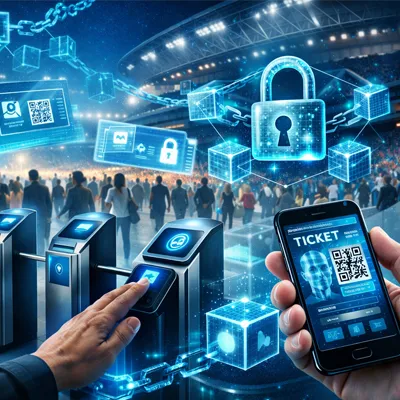
In the case of biometric ticketing and blockchain technology in events, the ticket is initially provided as a digital asset in the form of a blockchain. A cryptograph of this is in turn associated with the biometric identity of the attendee. The system is also capable of real-time verification at point of entry of both the biometric identifier and the blockchain record. This is a two-layer validation that removes vulnerabilities found in single systems.
To the operators, this combined methodology will eliminate the reliance on central databases that are prone to failure or to cyber-attacks. It also also enables interoperability between venues and platforms, which is a major need of future-proof access control systems to operators with multi-site operations.
Enhancing Digital Ticketing Security across High-Risk Environments
The issue of digital ticketing security is increasingly becoming a point of concern, and mostly in places with high traffic, high ticket price, or high risk of terrorism. False tickets, information security breaches, and downtime can be quite detrimental financially and reputation wise to operators. Biometric ticketing systems overcome these issues by removing the sharing of credentials and impersonation, and blockchain provides another cryptographic security feature.
Under safe blockchain-based ticketing on stadiums, each entrance operation could be tracked to a certified identity and a certified transaction history. This is able to facilitate forensic analysis, compliance reporting and real-time threat detection. Such anomalies as repeated access attempts, unauthorized entry, suspicious movement patterns in the venue can be easily detected by the operators.
Further, the decentralized nature of blockchain minimizes the chances of single point of failure. When one node is contaminated, the integrity of the ticketing data will not be affected on the network. This strength is especially appreciated in very large events where more downtime or breaches may interfere with work and undermine the confidence of stakeholders.
How Biometric Ticketing Enhances Venue Security and Operations
It is important to note that to comprehend the aviation of biometric ticketing and its role in improving venue security, it is necessary to look beyond the entry gates. The Biometric access control goes all the way to the venue and allows safe access to areas which are restricted like the VIP areas, staff areas, media rooms and the control centres. Role-based permissions based on biometric identities may be applied to each access point instead of using physical badges or manual verifications.
Operationally, biometric ticketing systems offer live information on crowd density, entrance rates and dwell times. The information can facilitate the planning of emergency response and crowd management and resource allocation. The operators can identify the bottlenecks, optimize the operation of the gates, and the attendant experience in general without compromising on the security.
Additionally, biometric data can be anonymized and aggregated to ensure that privacy laws are satisfied and valuable information can be obtained. Having consent management, which operates on blockchain and is integrated with it, the operators will have an opportunity to ensure the transparent use of data, and no laws will be broken, which will aid in resolving the growing concerns about the privacy of data and the lack of trust in the users.
Business Value for Operators and Ecosystem Stakeholders
In the case of B2B decision-makers, security is not the only reason to engage in the use of biometric ticketing and blockchain, but also quantifiable business results. One of the immediate benefits is the protection of revenue since fraud, unauthorized reselling and duplication of tickets will be practically removed. Automation also helps operators to cut down their operational costs, entry processing is faster and less staffing is required.
Programmable tickets enable blockchain ticketing solutions to open up new revenue models. Smart contracts may implement revenue sharing contracts, dynamic price contracts or bundled services including concessions and merchandise. To the venue operators and event organizers, this flexibility has provided new monetization opportunities whilst ensuring dominance upon the ticketing ecosystem.
This shift is also beneficial to technology providers, system integrators and platform vendors. The need to have interoperable access control technology, biometric hardware, blockchain platform and analytics services is establishing new opportunities along the B2B value chain. Scaling of those solutions will also be achieved by ecosystem alliances and standardization once they are adopted.
Regulatory, Privacy, and Ethical Considerations
Although the advantages are striking, biometric ticketing and use of blockchain should be in sync with regulatory and ethical guidelines. In most jurisdictions, biometric data is categorized as sensitive personal information and it must be subject to strict rules regarding collection, storage, and use. The operators will have to apply the principles of privacy-by-design, such as the minimization of data, encryption, and consent tools used by the user.
Another way that blockchain technology can aid compliance is by ensuring that there is a transparent audit trail and irrevocable consent records. Nonetheless, operators have to be mindful of the way systems are designed to overcome such issues like the impossibility to change data in terms of data deletion privileges. There is a growing adoption of hybrid architectures whereby biometric templates are stored off-chain and verified and recorded by blockchain to create a balance between security and compliance.
B2B wise, it is necessary to proactively engage regulators, industry bodies, and cybersecurity professionals. The clear governance structures will be essential in the achieving the long-term sustainability and the trust of the population in biometric ticketing and access control systems based on blockchains.
The Future of Access Control Technology for Events and Venues
Due to increased rate of digital transformation, access control technology is transforming into not a transactional but a strategic ability. The key to this evolution is biometric ticketing and event blockchain technology, which allows having seamless, secure, and data-driven experiences. It can be predicted that future advancement will involve AI-based risk detection, intercity identity mobility, and further connection to smart city infrastructure.
Future-proof access control systems will be the ones that will be flexible, interoperable, and durable to the operators. One solution that fits all these criteria is biometric and blockchain-based solutions which offer modular architecture that can be adapted to changing requirements. With the maturity of the ecosystems it can be anticipated that there will be expanded usage in sports, entertainment, transportation and even large scale public venues.
Conclusion: Building Trust and Resilience through Innovation
Blockchain ticketing and biometric ticketing systems are a potent combination of identity, security, and transparency. They work jointly and address the traditional difficulties in access control as well as creating new operational and business opportunities to the operators. These technologies are transforming the nature of access management in busy spaces by increasing the security of digital ticketing, improving venue security, and providing decision-makers with data to drive their decisions.
Investments in Biometric ticketing and blockchain do not mean the use of new tools among B2B stakeholders. It is regarding the establishment of strong and future-proofed access control ecosystems that can be expanded with demand, be changed in line with regulatory requirements, and gain the trust of both the attendees and the partners. The industry is moving in the right direction with secure, identity-based and decentralized access control becoming a standard and not an exception.
 Media Pack Download
 Newsletters
 Industrial Events