

Zero Downtime Arenas: The Role of AI in Modern Sports Infrastructure
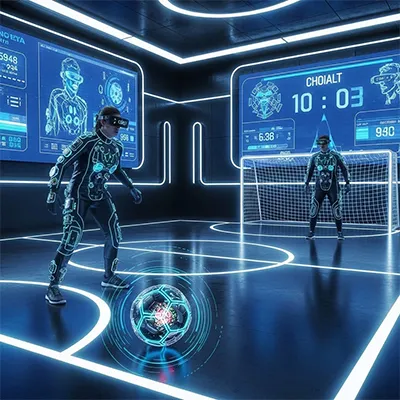
Sports facilities are no longer merely the result of a crowd coming together to watch a match, but rather extremely complicated ecosystems that are driven by technologies, automation, and real-time intelligence. The need to offer perfect experiences to global audiences and the growing intolerance of downtime at stadiums are forcing the industry to look to AI-based innovations. This has not only seen AI in sports infrastructure become a trend but a revolution that cannot be stopped and is redefining the way arenas are run, ensuring their safety, and ensuring continuous events become a reality.
The main issue that most facility managers are currently questioning is rather straightforward but deep: How did it happen that huge arenas that accommodate tens of thousands of people can do their business without a moment of stagnation? It is in the combination of smart stadium technology, live data, and analytics.
The Rise of Intelligent Sports Ecosystems
The sports business worldwide has been digitized, where AI-based systems make sure that all the games, concerts, or even events are executed with perfect accuracy. The implementation of AI in sports infrastructure can be explained by the necessity to remove errors, decrease the inefficiency of the functioning, and forecast failures prior to their occurrence to disrupt sporting events.
The modern arenas incorporate thousands of devices that are interconnected to form a single intelligent network. These are high-definition surveillance cameras, automated ticketing gates, motion sensors, HVAC units, lighting grids, and emergency safety systems. The new scale of intelligence needed to control such an interdependent environment is massive, and that is where AI used in stadium management can be of critical importance.
Rather than responding to the breakdowns, sports venues are currently moving towards predictive maintenance, an active model that uses data to predict the equipment breakdowns before they happen. The transfer of manual responses to automated prediction is the start of the new era: the era of zero-downtime arenas.
Why Zero Downtime Matters in Modern Arenas
Sports stadiums can be left without operation in many ways - the air conditioning system fails, preventing the indoor arena from being comfortable, the power shortage causes the play to be disrupted, the turnstile stops working, providing an entry delay, or the sound system malfunctions at the game’s climax. Any inconveniences lead to thousands of disappointed fans, huge financial costs, and reputational losses.
It is no longer a dream to have smart arena systems that enable the continuity of events but it is shaping up to be an expectation. The fans expect easy access to parking till seating, Wi-Fi till visual display, as well as climate control till concessions. It would be close to impossible to achieve these expectations without smart automation.
This is the reason why the coordination of AI-managed stadiums and safety is changing all the processes involved in the management of sports venues, such that the smallest processes are executed in a clockwork manner.
Predictive Maintenance: The Core of Zero Downtime Stadiums
Predictive maintenance is one of the most powerful AI uses in sports infrastructure. In addition to allowing one to predict possible failures, the technique can eradicate the element of guesswork in maintenance schedules. Systems are also continuously observed instead of routine checks, which give feedback that is used to initiate maintenance when required.
Through predictive maintenance of sports venues, the operators of the stadiums can observe the condition of equipment, thermal conditions, air flow anomalies, electrical variations, and mechanical strains through advanced algorithms. This guarantees the timely interventions and elimination of expensive breakdowns.
Yet, what is the mechanism of this? The solution is in the fact that IoT sensors to monitor the equipment in the stadium in real-time are integrated into the framework of data-driven maintenance.
The Power of Real-Time IoT and AI Synergy
IoT and AI are in a way that is defining the future of sports venues. There are thousands of sensors in lighting grids, turf systems, HVAC equipment, seating, elevators, escalators, and security systems that are always transmitting data.
AI engines process this data and can be used to operate AI-powered stadiums and provide safety, generating insights like:
- Early indications of equipment stress.
- Performance inefficiencies
- Timely fluctuations of temperature or humidity.
- Visitor movement heatmaps
- Threat detection alerts
- Energy consumption spikes
This real-time surveillance will allow venues to be in a permanent state of preparedness to provide fans with comfort and secure the continuity of an event.
AI for Lighting and HVAC: Efficiency Meets Reliability
Lighting and HVAC are two of the most essential systems in sports venues, which use huge amounts of energy and directly affect the quality of events. One lighting malfunction is sufficient to halt a match, and a malfunctioning HVAC would render an indoor facility intolerable.
The current arenas have also adopted AI software in lighting and HVAC in arenas in order to ensure that these systems are under strict control. The AI algorithms can analyze the weather patterns, the occupancy rates, the heat distribution, and event schedules to optimize operations. The outcome is not only continuous operations but also the maximized use of energy.
As the pressure on sports facilities to move towards sustainable operations grows, the two principles, combined with energy efficiency and reliability, are an interesting case of value. AI saves unnecessary energy consumption and guarantees that AI eliminates downtime in sports arenas with intelligent automation.
Stadium Management Reimagined with AI
The old stadium management involved massive teams who managed various systems separately - security teams, which managed surveillance, mechanical teams, which managed equipment, IT teams, which managed the network, and HVAC teams, which adjusted climate controls. This myopic method would be prone to mistakes and time waste.
An intelligent AI platform today is a centrally integrated system incorporating all these systems into a command hub. The new-age stadium management model AI will enable the operational teams to oversee real-time performance measurements at a single interface.
More powerful is the automation of the reactions of the AI. At the point of thresholds going above a predetermined limit - such as an unexpected rush of the crowd or an odd vibration in a specific mechanical device - the AI can take immediate corrective measures without having to wait until it is reported by a human. This is the ability that makes the promise of the smart arena system of uninterrupted events strong.
Market Insights: Why AI Adoption Is Accelerating
The world is experiencing a transformation in the sports infrastructure market. Stadia, which used to be constructed simply based on their capacity, are now being re-modeled to be intelligent, connected, and automated.
The simplified insight snapshot is presented below:
| Factor | Traditional Stadiums | AI-Driven Modern Arenas |
| Operations | Manual, reactive | Automated, predictive |
| Maintenance | Calendar-based | Predictive maintenance in sports |
| Fan Experience | Generic | Personalized through smart stadium technology |
| Downtime Risk | High | Extremely low due to how AI prevents downtime in sports stadiums |
| Energy Efficiency | Moderate | AI-optimized using AI technology for lighting and HVAC in arenas |
This is also a strategic transformation of infrastructure from one that just operates to infrastructure that learns, evolves, and adapts.
How AI Ensures Seamless Safety in Arenas
The issue of safety cannot be compromised in a sports venue. Through AI, safety is enhanced with a higher level of video analytics, detection of abnormal behavior, prediction of crowds, and automatic notifications. Using AI-controlled stadium activities and safety, the operators of the arena will be able to monitor any possible danger, including overcrowding, trespassing, or malfunctioning equipment.
In addition, AI introduces accuracy to the response to emergencies. Through the IoT sensors, it can analyze data, spot dangerous conditions that may be detected at the stadium equipment, such as overheating electrical panels and clogged ventilation ducts, well in advance before they can become dangerous.
This proactive safety system not only reduces the risk, but also enhances the risk resilience of the entire sports facilities.
The Road to Fully Autonomous Sports Venues
The development of fully autonomous arenas can be seen as one of the new aspirations in sports infrastructure. The following generation facilities will strongly depend on AI in the sports infrastructure to eliminate most of the downtime-associated challenges by:
- Self-diagnosing systems
- Climate management (automated).
- Anticipatory crowd movement prediction.
- AI-assisted access control and entry.
- Smart grid energy distribution.
- Real-time surveillance analytics.
With the advancement of these technologies, the idea of zero downtime will become one of the design pillars of sports venues all around the world.
Case Insight: How Predictive Maintenance Redefines Reliability
Using an actual case, assume that a stadium has 2,500 lighting fixtures. Under the traditional maintenance process, the technicians have to check each light, which is time-consuming and can be easily overlooked.
However, using predictive maintenance in sports venues, every game is fitted with IoT sensors that indicate:
- Energy flow irregularities
- Bulb degradation rate
- Circuit fluctuations
- Heat signatures
These parameters are analyzed by AI, which anticipates the point of failure of a certain fixture. This guarantees that replacements are made in time when they are really needed, as a great example of how AI can make sports stadiums non-hazardous.
This can be extended to HVAC motors, security, elevators, audio equipment, and entry gates, forming a total defense against unexpected failures.
Smart Stadium Technology and the Future Fan Experience
The smart stadium technology can not only enhance the activities of the backend but also enhance the engagement of fans to the highest levels. AI improves all aspects - active seating suggestions and movement without the congestion, augmented reality (AR) scoreboard displays, and personalized notifications.
The perception of the stadium is changed whenever fans get continual comfort, smooth connectivity, and smart services. In the background, the unspoken authority of AI-based stadium control and safety makes all things work perfectly.
Conclusion: The Dawn of the Zero Downtime Era
The sports business in the modern world is drifting towards a strong vision - arenas which are flaw-free, risk-anticipating, and responsive to the constantly evolving needs. It is a vision that is being fuelled by an existing fusion of AI in infrastructure, data-informed intelligence, and automated systems in sports.
The continuity, safety, and operational brilliance of the sports venue will characterize the future of sports venues with smart mechanisms forecasting failures, automation of responses, and optimization of energy usage.
With the adoption of smart stadium technology, arenas will remain in a process of transforming to be passive to dynamic and self-educating ecosystems. Whether it is predictive maintenance in sports, predictive high-efficiency climate controls, or AI at the core of a new phase in sports infrastructure.
Finally, the prospect of smart arena systems of non-stop events is not only the absence of downtime - it is the embodiment of incredible experiences in which the world of technology and human emotions meet in the best place possible.
 Media Pack Download
 Newsletters
 Industrial Events