

Sustainable Golf Course Design: Balancing Playability and Environmental Impact
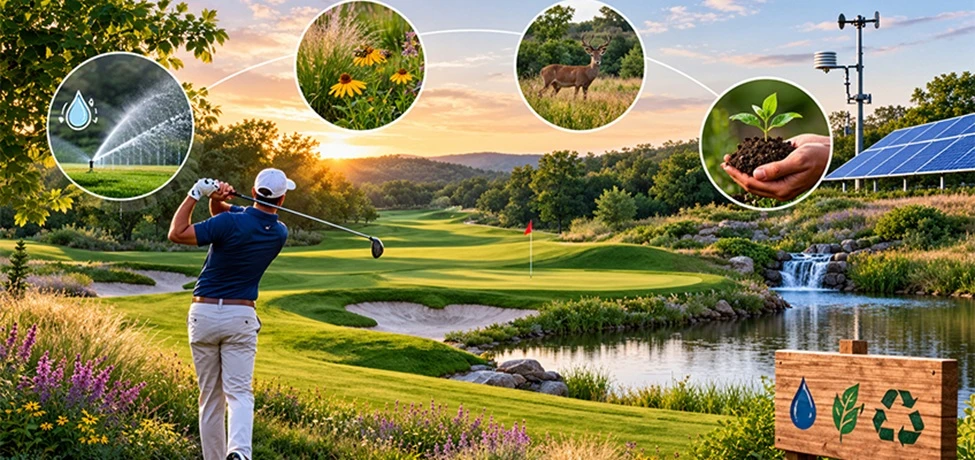
Every golfer knows the feeling of stepping onto a perfectly striped fairway. What most of us don’t see is the price tag behind that perfection: millions of gallons of water, tonnes of fertilizer and acres of land maintained for a few hours of play a day.
That’s the tension at the heart of golf course design today. Courses are expected to be beautiful, challenging and fun, but they’re also expected to protect water supplies, wildlife and the land they sit on. Rising water costs, stricter regulations and a new generation of environmentally minded golfers are making that balance impossible to ignore.
The good news is that you don’t have to choose. Sustainable golf course design shows that a course can be thoughtful about the planet and still play brilliantly. This guide breaks down how modern designers do it, from water-efficient layouts to smarter day-to-day management.
Key Takeaways
- Sustainable golf course design reduces water, chemical and energy use while keeping the course enjoyable to play.
- Turf reduction, native vegetation and smart irrigation are the three biggest levers.
- Planning matters more than retrofitting. Decisions made on day one shape a course’s footprint for decades.
- Eco-friendly courses often cost less to maintain over time.
What Is Sustainable Golf Course Design?
Sustainable golf course design is an approach to planning, building and maintaining a course so that it minimizes environmental harm, conserves resources and supports local ecosystems, without sacrificing the quality of play.
In practice, that means designers ask different questions at the start of a project:
- How much of this land really needs to be maintained turf?
- Where does water come from, and where does it go?
- What native plants and wildlife already live here?
- Can the layout work with the terrain instead of reshaping it?
The result is a course that feels like it belongs to its landscape instead of sitting on top of it.
Why Golf Course Sustainability Matters Now
Golf has a reputation problem. Critics point to heavy water use, fertilizer runoff and large areas of land used for a small number of players. Some of that criticism is fair, and some of it is outdated.
Here’s what has changed:
1. Water is getting scarcer and more expensive. In many regions, courses face restrictions or rising costs for irrigation water.
2. Regulations are tightening. Local authorities increasingly ask for environmental impact assessments before approving new projects.
3. Golfers care. Younger players in particular want to play on courses that reflect their values.
4. The economics make sense. Less mowing, less watering and less fertilizing means lower operating costs.
Golf course sustainability is no longer a PR exercise. It’s a business and survival strategy.
The Playability Question: Can Eco-Friendly Courses Still Be Fun?
This is the worry I hear most. Will a sustainable course play like a scrubby municipal track?
No. Some of the world’s most admired courses are links-style layouts built on firm, fast, naturally contoured ground. They use fescue grasses, sandy soils and minimal irrigation, and golfers love them because the ball bounces, rolls and reacts in interesting ways.
Playability comes from:
- Strategic design. Interesting angles, risk-reward choices and green complexes.
- Consistent surfaces. Greens and fairways that behave predictably.
- Fair challenge. Hazards that test skill without punishing every miss.
None of those require 150 acres of irrigated bluegrass. In fact, designers often find that shrinking maintained turf improves the experience. Natural roughs and native areas add texture, create visual contrast and give shots a sense of place.
Water-Efficient Golf Course Design: Where the Biggest Savings Are
Irrigation is usually the largest environmental and financial cost on a course, so water-efficient golf course design is the best place to start.
1. Right Grass, Right Place
Turfgrass choice should match the local climate. Warm-season grasses like paspalum and Bermuda tend to handle heat and drought better in hot regions. Cool-season grasses such as fescue suit cooler climates. Choosing a grass that suits the site from the start can cut irrigation needs dramatically compared to forcing the wrong species to survive.
2. Reduce Maintained Turf
Many older courses maintain far more acreage than the game requires. Sustainable designers trim wide fairways, convert out-of-play areas to native grasses and shrink rough zones. Every acre taken out of intensive maintenance saves water, fuel, labor and chemicals.
3. Smart Irrigation Systems
Modern systems use weather stations, soil moisture sensors and evapotranspiration data to water only when and where needed. Sprinkler heads can be zoned so greens, tees and fairways each get what they actually require, rather than a blanket schedule.
4. Alternative Water Sources
Reclaimed (recycled) water, captured stormwater and on-site ponds can replace potable water for irrigation. When designed well, retention ponds also act as natural filters and add habitat.
5. Soil Health and Drainage
Healthy, well-structured soil holds moisture longer and drains properly. Designers shape the site so water moves through the course in a controlled way instead of pooling or running off.
Water Conservation Strategies for Golf Course Design: A Quick Checklist
If you’re planning a new course or renovating an existing one, these are the high-impact moves:
- Audit current water use before changing anything
- Choose drought-tolerant turf varieties suited to your climate zone
- Cut irrigated acreage and replace it with native or low-input vegetation
- Install sensor-based, zoned irrigation
- Use reclaimed or stormwater where regulations allow
- Build bioswales and retention basins to manage runoff
- Train staff to hand-water only hot spots instead of running full cycles
Environmentally Responsible Golf Course Design Beyond Water
Water gets the headlines, but environmentally responsible golf course design covers more ground than that.
Habitat protection. Courses can act as green corridors in developed areas. Preserving wetlands, mature trees and native meadows supports birds, pollinators and small mammals. Many designers map existing habitat before drawing a single hole.
Minimal earthmoving. Heavy grading is expensive and disruptive. Routing holes to follow natural contours keeps soil intact, reduces erosion and lowers construction costs.
Reduced chemical inputs. Integrated pest management, using monitoring, cultural practices and targeted treatment instead of routine spraying, cuts pesticide and fertilizer use. Buffer zones around water features stop what is applied from reaching streams and ponds.
Energy and materials. Electric or hybrid maintenance equipment, solar power for clubhouses, recycled materials in cart paths and locally sourced stone and timber all shrink a course’s footprint.
Sustainable Golf Course Planning: Start Early, Think Long-Term
Sustainable golf course planning works best when environmental thinking enters the process at the very beginning, not as an afterthought.
A solid planning process usually includes:
1. Site analysis. Soils, topography, hydrology, climate, existing vegetation and wildlife.
2. Stakeholder input. Neighbors, local authorities, environmental groups and future members.
3. Routing with the land. Letting natural features guide hole placement.
4. Lifecycle costing. Comparing not just construction cost but 20 to 30 years of maintenance.
5. Monitoring plan. Setting measurable targets for water, chemicals and biodiversity, then tracking them.
Retrofitting is possible, and many clubs do it successfully. But it’s almost always more expensive than building the right way from the start.
Eco-Friendly Golf Course Management: Design Is Only Half the Story
A beautifully planned course can still underperform if day-to-day management ignores its sustainable intent. Eco-friendly golf course management is what keeps those design choices working.
Good practices include:
- Adjusting mowing heights seasonally to reduce stress and water demand
- Aerating and topdressing to keep soil healthy
- Tracking water, fertilizer and energy use monthly
- Leaving non-play areas unmown to support wildlife
- Educating golfers, because people tolerate a brown-tinged fairway when they understand why it’s there
Certification programs such as Audubon International’s and GEO Certified offer frameworks and credibility for clubs that want to demonstrate their commitment.
Common Myths About Sustainable Golf Courses
“Sustainable means brown and ugly.” Not so. Firm, fast turf has a different beauty, and native areas add color and movement.
“It costs too much.” Upfront costs can be higher in some cases, but long-term savings on water, labor and inputs often outweigh them.
“It only works for new courses.” Renovations can deliver major gains, especially in irrigation upgrades and turf reduction.
“Golfers won’t accept it.” Surveys and club experiences suggest many golfers welcome it, particularly when the club explains its approach.
Frequently Asked Questions
What makes a golf course sustainable?
A sustainable golf course conserves water, limits chemical use, protects local habitat and uses efficient maintenance practices, while still delivering a high-quality playing experience.
How can golf courses reduce water use?
By choosing climate-appropriate grasses, reducing irrigated acreage, installing sensor-based irrigation, using reclaimed water and improving soil health.
Are eco-friendly golf courses more expensive to build?
Sometimes slightly, depending on the site. But minimal earthmoving and lower maintenance needs often reduce total lifetime cost.
Can a sustainable course still be challenging?
Absolutely. Challenge comes from routing, green design and strategic hazards, not from the amount of irrigated grass.
Who designs sustainable golf courses?
Golf course architects, landscape architects, agronomists, hydrologists and ecologists usually work together on sustainable projects.
The Bottom Line
Sustainable golf course design isn’t a trade-off between the planet and the game. It’s a smarter way to build both. By working with the land, using water wisely and managing the course thoughtfully, designers can create places that are a joy to play and responsible to the environment around them.
The best courses of the next fifty years won’t be the greenest-looking ones. They’ll be the ones that look like they’ve always belonged exactly where they are.
 Media Pack Download
 Newsletters
 Industrial Events