
Inclusive Stadium Design: Enhancing Accessibility Through Smart Technology
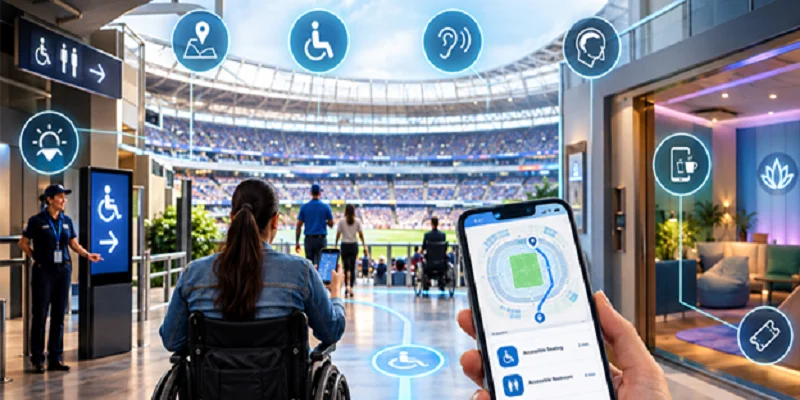
Picture this: a wheelchair user rolls up to a stadium gate, and instead of hunting for a staff member or circling the building looking for a ramp, their phone already knows the fastest accessible route to their seat. That's not a futuristic fantasy - it's what inclusive stadium design looks like when it's paired with smart technology in 2026.
For decades, "accessible" mostly meant a ramp here, a few reserved seats there, and an accessible restroom tucked somewhere near the concourse. It checked a legal box, but it rarely felt like the venue was actually built for everyone. That's changing fast. Stadiums around the world are rethinking accessibility from the ground up - not as an afterthought, but as a core part of how the building works. And the driving force behind this shift is technology.
If you're a venue owner, architect, event planner, or just someone curious about where sports and technology are heading, this article breaks down exactly how smart stadium technology is reshaping accessibility, why it matters, and what the future holds.
Why Stadium Accessibility Needs a Rethink
Traditional accessibility planning tends to be reactive. A venue gets built, complaints come in, and retrofits happen one at a time - a ramp added here, signage updated there. The problem is that disability isn't a single, uniform experience. A person using a wheelchair has different needs than someone who is blind or low-vision, who has different needs than someone with autism who's sensitive to crowd noise and bright lights, who has different needs again than a parent managing a stroller and two kids.
Stadium accessibility done well has to account for this range of needs simultaneously, and that's genuinely hard to do with static infrastructure alone. A fixed ramp doesn't help someone who can't read a printed sign. A single accessible seating section doesn't solve wayfinding for someone who's overwhelmed by noise. This is exactly where technology earns its place - not replacing physical accessibility features, but making them smarter, more responsive, and easier to actually use.
What Universal Stadium Design Actually Means
Universal stadium design is a step beyond basic compliance. Instead of designing a "standard" experience and then bolting on accommodations for people with disabilities, universal design starts with the assumption that users will have a huge range of physical, sensory, and cognitive needs - and builds the venue to flex around that from day one.
In practice, this looks like:
- Wide, step-free paths that work equally well for wheelchairs, strollers, and elderly fans, not just designated "accessible routes"
- Sensory-friendly zones built into the original floor plan, not carved out later
- Seating distributed throughout the venue rather than clustered in one visibility-limited section
- Wayfinding systems that work for people who can't read signage, whether due to vision impairment, language barriers, or cognitive differences
The key mindset shift is this: accessible design isn't a separate category of design. It's just good sports venue design - because a stadium that works well for a fan in a wheelchair usually works better for every fan.
How Smart Technology Improves Stadium Accessibility
So how does this play out in real venues? Here's where smart stadium accessibility tools are making the biggest difference.
1. Real-Time Navigation and Wayfinding
Apps connected to a stadium's Wi-Fi and Bluetooth beacon network can guide a visitor step-by-step to their seat, the nearest accessible restroom, or a quiet room - accounting for their specific mobility needs. Instead of a static map, the app recalculates routes in real time based on crowd density, closures, or elevator outages.
This is one of the clearest examples of how smart technology improves stadium accessibility: it turns a confusing, unfamiliar space into something a first-time visitor can navigate with confidence, without needing to ask for help at every turn.
2. Assistive Audio and Visual Systems
Many modern venues now offer app-based audio description feeds for fans who are blind or low-vision, letting them follow live play-by-play commentary through their own headphones. Similarly, captioning systems display real-time transcripts of announcements on personal devices or dedicated screens for Deaf and hard-of-hearing fans - something a single stadium-wide PA system could never do well on its own.
3. Sensory Regulation Tools
Sensory-friendly rooms equipped with adjustable lighting, sound dampening, and calming visuals give neurodivergent fans - and anyone overstimulated by crowd noise - a place to reset without missing the event. Some venues pair these rooms with apps that display live noise and crowd-density levels, so families can plan bathroom breaks or exits around quieter moments.
4. Mobile Ordering and Contactless Services
Something as simple as mobile food and merchandise ordering is a major accessibility win. It removes the need to stand in long lines, navigate crowded concession stands, or communicate an order verbally - all barriers that disproportionately affect fans with mobility, sensory, or communication differences.
5. Smart Seating and Ticketing Systems
Digital ticketing platforms now let fans specify accessibility needs at the point of booking - proximity to elevators, companion seating, sightline requirements over standing crowds - and the system automatically filters available seats. This is a huge upgrade from the old model of calling a box office and hoping someone understands the request.
6. AI-Powered Staff Support
Some venues are piloting AI tools that flag accessibility requests to nearby staff in real time - for example, alerting the closest usher when a fan requests wheelchair assistance through an app, rather than relying on the fan to physically locate someone.
Accessible Stadium Technology in Action
It's worth being honest: not every venue has fully implemented this vision yet, and rollout varies a lot by budget, region, and building age. But the direction is clear. Major venues investing in stadium accessibility solutions are seeing measurable results - higher attendance from fans with disabilities, fewer complaints, and stronger loyalty from a demographic that has historically been underserved by live sports and entertainment.
There's also a business case here that's easy to overlook. Globally, hundreds of millions of people live with some form of disability, and many bring family or friends along when they attend events. Venues that get accessibility right aren't just doing the right thing - they're tapping into a significant, often loyal audience segment that competitors are still ignoring.
Common Questions About Smart Stadium Accessibility
What is inclusive stadium design?
Inclusive stadium design is an approach to building and renovating sports venues that considers the full range of fan abilities - mobility, vision, hearing, and cognitive needs - from the earliest planning stages, rather than adding accommodations after the fact.
How does smart technology improve stadium accessibility?
Smart technology improves accessibility by replacing static, one-size-fits-all features with responsive tools - real-time navigation apps, live captioning, sensory monitoring, and mobile ordering - that adapt to each fan's specific needs in the moment.
What's the difference between accessible design and universal design?
Accessible design typically focuses on meeting minimum requirements for people with disabilities. Universal design goes further, aiming to create spaces that work well for the widest possible range of people from the start, reducing the need for separate accommodations altogether.
Are smart accessibility features only useful for people with disabilities?
No. Features like real-time wayfinding, mobile ordering, and live captioning tend to improve the experience for every fan - parents with strollers, elderly attendees, and anyone unfamiliar with the venue all benefit.
What should venues prioritize first when upgrading accessibility?
Most accessibility experts recommend starting with wayfinding and communication tools (apps, signage, captioning), since these have a broad impact across many types of disabilities and are often less costly than major structural changes.
The Road Ahead
The venues leading this shift aren't treating accessibility as a compliance checklist - they're treating it as a design philosophy that happens to be powered by technology. As accessible stadium technology keeps advancing, expect to see more predictive tools: apps that suggest the best entry gate before you even arrive, AI that adjusts lighting and sound in real time based on aggregated fan feedback, and seating systems that adapt to accessibility needs on the fly rather than through pre-set categories.
The bigger takeaway for anyone in sports venue planning is this: accessibility and innovation aren't competing priorities. The smartest stadiums are proving that when you design for the fan who faces the most barriers, you end up building a better experience for everyone who walks through the gates.
 Media Pack Download
 Newsletters
 Industrial Events