
Modular Stadium Design: Building Flexible Arenas for Multi-Event Use
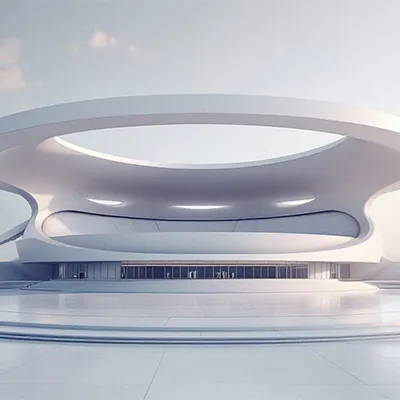
The necessity for modular design of stadiums has been on the rise as never before in the constantly maturing world of sports, entertainment, and live events. Due to the competition between cities to host international tournaments, concerts, exhibitions, and community events, the necessity of the flexible architecture of arenas that can transform into various functions has become a trend. Multi-event stadium design is transforming the future of sports infrastructure, both in small-scale community sports fields and on a bigger scale with Olympic-scale facilities.
The Rise of Modular Thinking in Stadium Architecture
The old stadiums that were constructed to serve one sport or even a recurring event are not used frequently. This lack of efficiency created the concept behind the modular sports facility design, wherein arenas could be redesigned, expanded, or even removed, down on the nature of the event and the size of the audience.
A modular design of the stadium, in contrast to the traditional concrete design, uses prefabricated parts that can be easily assembled and disassembled. This will not only save on the construction time but also guarantee a sustainable lifecycle of the facility.
Surprisingly, major architecture companies are currently taking advantage of scalable stadium architecture to accommodate the dynamic requirements of the audience. Such designs enable the owners of venues to expand when hosting a World Cup and contract when hosting local leagues- all on the same base design. This flexibility is changing the manner in which stadiums are designed and funded all over the world.
Flexible Arena Architecture: A Revolution in Event Planning
The beauty of flexible arena architecture is the fact that it will be able to meet various functions without affecting the spectator experience and security. Take the case when a venue is hosting a football game, a live concert, and a corporate event, all in the same venue, on Saturday, Sunday, and Monday, respectively.
This is flexible through the use of retractable seating in stadiums, moveable walls, modular stands, and replaceable floor systems. Such inventions render the multi-event stadium design not only possible, but also money-saving.
Flexible arena architecture is even better as it is sustainable. Modular materials can be reused or moved, which minimizes waste and the environmental impact of construction projects. With the governments and private developers focusing on environmentally friendly programs, modularity provides a viable route to the objectives of green infrastructure.
How to Design a Modular Stadium for Concerts and Sports Events
To come up with the plans of a modern modular arena, it is planned, and there must be thorough knowledge of structural engineering and audience behaviour. But what to do to ensure an effective design of a modular stadium for concerts and sports events?
It begins with the development of a core design that is interchangeable in modules. To provide flexibility and strength, architects implement the principles of modular sports facility design, carrying prefabricated frames made of steel or aluminum. The design also considers retractable seating in stadiums, which can be brought out when there is a sport and drawn in when there is a concert. This will give optimized sightlines and acoustics.
In addition to that, the multipurpose arena design incorporates sophisticated acoustic systems, lighting systems, and floor systems to suit different types of events. The result is that it will enable fast event turnover without impractical downtimes or expenditures.
As an example, a temporary stadium structure can be erected to conduct major events such as the FIFA World Cup and then converted into small community facilities. A modular design of stadiums became a bright example of how to implement the concept in reality, and the Stadium 974 in Qatar was constructed on the basis of shipping containers.
Future of Sustainable Infrastructure: Temporary Stadium Design.
The design of temporary stadiums has been on the increase among event organizers as they are attempting to locate economical and ecologically responsible solutions. The nations do not need to incur billions of dollars to construct permanent structures that go to waste once they are done with the event, but rather, they can utilize scalable stadium buildings that can be dismantled and transported to other areas.
Such flexibility not only makes it economical, but also makes it politically and socially responsible. Mega-event hosting does not require massive constructions that will leave taxpayers with infrastructure that is not used. Under modular sport facility design, complete stadiums can be either moved or transformed into smaller sport complexes, schools, or cultural centers.
Circular economy principles are also supported by temporary venues because the materials constituting modular parts of the stadium can be reused and recycled. Such a change of permanence to adaptability denotes a paradigm shift in our perception of sports architecture.
Benefits of Retractable Seating & Modular Stadium Sections
The rewards of retractable seating and modular sections of the stadium are far beyond the convenience. They redefine operational performance, fan base, and performance.
The stadiums are equipped with retractable pews that help the organizers to change the seating layout, maximize the view, and maximize the occupancy depending on the event. In a football match, a 360 seating arrangement may be required, but in a concert, the front stage arrangement is required. This is what constitutes a true multipurpose arena.
Moreover, sections of a stadium can be easily maintained via modularity. It is possible to replace broken components with other parts without interfering with the entire architecture. This aspect significantly lowers the downtimes, thus leaving the venues operational throughout the year.
Scalability is also advantageous to developers. Scalable stadium design enables a gradual increase in building size with the growth in audience demand and not overbuilding. This economic flexibility is cost-effective, thus making modular stadium design a favorite among the emerging economies and even the individual investor.
Choosing Modular vs. Permanent Stadium Construction
In the comparison between the construction of modular and permanent stadiums, it can be seen that it usually depends on the budget, the timeframe, and the probable use. Cities with a well-developed culture of sports and regular schedules of events would be suitable for permanent stadiums. Nevertheless, the modular sports facility design brings impeccable benefits to the temporary markets, the evolving markets, as well as the experimental markets.
We shall have a brief look at the comparisons between the two:
| Aspect | Modular Stadium Design | Permanent Stadium Design |
| Construction Time | Rapid (6–12 months) | Lengthy (2–4 years) |
| Flexibility | Highly adaptable for multi-event stadium design | Limited adaptability |
| Cost Efficiency | Lower upfront and maintenance costs | Higher investment and upkeep |
| Sustainability | Reusable, recyclable materials | High carbon footprint |
| Use Cases | Temporary stadium design, international events | Local teams, long-term use |
This analogy makes it very clear that the modular design of the stadium is reshaping the infrastructure plan, particularly in the markets where the event frequency is not constant. Flexible arena architecture is becoming the wiser choice among the cities that want to host rotating events or are interested in attracting tourists..
Scalable Stadium Architecture: Adapting to Future Demands
Scalable architecture of stadiums enables operators to increase or decrease their buildings depending on the trends of the audience. This scalability is such that stadiums will not become obsolete when sports change or entertainment tastes alter.
What is even more interesting is the way in which the design of modular sports facilities is merged with digital technologies. These modular arenas are made smart and sustainable, and future-proof with the application of smart sensors and energy-efficient lighting, as well as AI-controlled crowd management devices.
Market Insights: Growth of Modular Stadium Design
It is projected that the worldwide market of modular stadium design and flexible arena architecture will increase tremendously over the upcoming decade. Based on the industry estimates, multi-event stadium design has the potential to increase by more than 20 percent as countries are gearing up to host global tournaments, concerts, and e-gaming events.
Urbanization and public-private partnerships (PPP), which are more favorable to the temporary design of a stadium, also contribute to this growth because they lower the financial risk exposure. The Asia-Pacific, Europe, and the Middle East are the regions that are first experimenting with scalable architecture of the stadiums, as they have high numbers of events and do not have enough space.
The adoption of modular construction of stadiums as opposed to permanent construction is attracting an increasing number of investors due to its speed of ROI, mobility, and reduced carbon emissions. Actually, the modern venues have now been established as a symbol of innovation- the combination of architecture, engineering, and sustainability in a single smooth solution.
Case Study: Transforming Event Experience with Modular Design
A good illustration of the use of modular stadium design is the London Olympic Stadium. Originally constructed as a stadium to host the 2012 Games, it was subsequently converted into a football venue to host West Ham United and a concert venue. The design of the arena was changed through the use of flexible architecture, where seats in stadiums could be folded just in time to transform a sports venue into an entertainment venue and vice versa.
On the same note, the design of the Mercedes-Benz Arena in Berlin is multipurpose in that it serves as the venue where basketball, ice hockey, and live shows are held all under the same roof. These projects demonstrate how modular design of sports facilities may provide future-proofing of investment as well as increase the experience of the audience.
The Future Outlook: Designing Beyond Boundaries
With sustainability, cost-efficiency, and adaptability taking over as the pillars of a modern-day construction, modular stadium design will take over the infrastructure blueprint in the future. As the lightweight materials, smart technologies, and integrations of renewable energy increases, the flexible architecture of the arena will transform the entire concept of hosting events to a whole new dimension.
City planners and the organizers of events are already considering the design of a modular concert and sports stadium that can be transformed overnight to meet the needs of different communities and can even be transported after 10 years of operation. It is not about grandeur anymore; it is about versatility - having each component to have a variety of uses.
Flexibility is not the only advantage of retractable seating and modular sections of stadiums, but it also helps venues to change with the times, adapt to shifting demand, and make a profit over decades.
Finally, the decision to build a stadium in the form of a module or permanent construction is not only a technical decision but also a strategic one. It is an indication of the city being innovative, inclusive, and sustainable.
Conclusion
In an age where experiences are more important than buildings, modular stadium design is taking a silent revolution. It connects buildings and flexibility, forming arenas not only built - designed to change.
The future of sports and entertainment is in the flexibility that is thought to be introduced by the scalable architecture of stadiums, temporary design of stadiums, and multipurpose arena design. When we learn to create a modular stadium to support concerts and sporting events, we come a bit closer to the world where a single structure can provide the narration of a thousand stories--and each of these stories will be shaped by the crowd that fills it.
 Media Pack Download
 Newsletters
 Industrial Events