

How Renewable Energy Is Powering the Next Generation of Stadiums
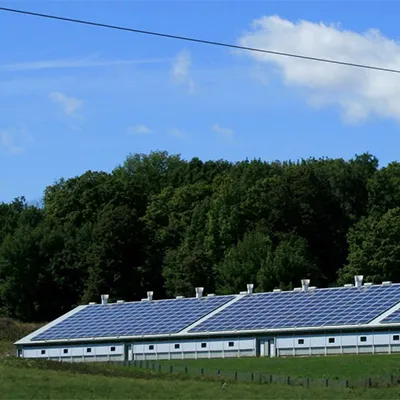
The sports business today is not just a competition, entertainment, and record-making shows, but it is also concerned with sustainability, innovations, and the environment. The arenas today are not merely architectural wonders, but they are also an indication of the world turning into a cleaner future. Discussion on renewable energy in stadiums has developed to be more than a gimmick since organizations all over the world have shifted to sustainable sports arenas that are fuelled by solar energy, wind energy, and geothermal energy.
It is now time to carry out more research and find out how renewable energy can be utilized to run modern stadiums and transform them into a technologically designed and purpose-driven ecosystem.
Emergence of green power in stadiums
When an entire stadium was powered using green technology, 10 years ago, the concept may have appeared far-fetched. However, now, green energy in stadiums is being incorporated into their design philosophy. Increasing energy costs, pressure to minimize carbon footprints, and the desire to find sustainable ways to operate sports venues other than through recycling or waste management have led sports organizations to consider sustainable energy solutions for sports venues.
Eco-friendly stadiums are setting new standards in sports as the sport can be used widely, like in football arenas, cricket grounds, and Olympic buildings, to affect environmental change. These buildings not only accommodate games but also harness the sun, the wind, and they also reuse water. The example of green energy in sports shows that innovation can be balanced with passion and form a new type of legacy, one that will not only enrich the fans but the planet, too.
Why Stadiums Need Sustainable Power
The stadiums are huge electricity consumers. One big festival may cost the world as much energy as a small town. Power is required in Floodlights, air conditioning, food concessions, sound systems, and scorecards. The necessity of renewable energy in stadiums is no longer a choice, but a necessity, with sustainability currently at the heart of corporate policy and public policy.
Green sports facilities minimize operational expenses, improve brand image, and comply with the carbon-cutting agenda worldwide. In addition, fans themselves are more conscious about climate problems. Consequently, eco-friendly stadiums are not only appealing to environmental activists but also enhance the involvement of the community and brand loyalty.
Then, the question will not be whether green energy should be applied to sports but it is possible to understand how well it can be applied to design and operation.
How Renewable Energy Powers Modern Stadiums
One should consider the interaction of architecture, technology, and environment to have a glimpse of how modern stadiums are powered by renewable energy. The sites are constructed to harness the resources of natural energy. Solar panels are placed on rooftops, wind turbines are placed on tall towers, and underground temperatures are controlled using geothermal systems.
The energy produced at the site of a sustainable sports venue is usually connected to the grid of the stadium, which eliminates the reliance on fossil fuels. Other facilities are even generating excess power that can be re-distributed to the local communities- a further indication of how sustainable energy solutions to sporting venues can go beyond the sporting ecosystem itself.
We will start by deconstructing the manner in which solar energy is changing sports stadiums, and other renewable energy technologies that are changing how stadiums are equipped.
How Solar Energy Is Transforming Sports Venues
Solar is the most popular and effective source of renewable energy that is currently in use. With the addition of solar panels, the use of renewable energy to power modern stadiums has altered the way solar is used to facilitate the creation of green energy in sports.
In most areas where the sun is plentiful, stadiums are fitted with photovoltaic panels that produce megawatts of electricity. It is in this way that solar energy is transforming sports venues, in that they will be able to operate to a large extent without relying on external power grids.
Look at Taipei Dome and Mercedes-Benz Stadium in Atlanta- two of the major demonstrations of green-friendly stadiums globally that have used solar power. An example is the Mercedes-Benz Stadium, which has over 4000 solar panels that have the capacity to generate some power that can be used to meet the energy demand of the facility even when there are no events. This model follows the next step of the solution of sustainable energy in the sports arenas, where the boundary between consumption and contribution is blurred.
Wind and Geothermal: They Are the Unspoken Heroes of Sport Sustainability
Though solar energy is taking headlines, other renewable energy sources in the stadium are also important. There is the rise of wind turbines and geothermal systems as the powerhouses in the background, with no whimpering.
The Amsterdam ArenA (currently known as the Johan Cruyff Arena) is an ideal illustration of the green sports energy using more than one source. It integrates both solar panels and wind turbines as well as energy storage systems in second-life electric vehicle batteries. The combination of these factors evidences the possibility of renewable energy to power modern stadiums through the diversification of the strategy rather than one source of power supply.
This also applies to the Iceland National stadium, which also takes geothermal energy, which is naturally situated in the location, to maintain the climate at the appropriate temperatures, not only for the players but also for the spectators. These models bring out the adaptive nature of sustainable sports venues to renewable strategies depending on geographical advantage.
Case Study Table: Examples of Eco-Friendly Stadiums Worldwide
| Stadium Name | Location | Renewable Energy Technology Used | Highlights |
| Mercedes-Benz Stadium | USA | Solar Power | LEED Platinum certified, over 4,000 solar panels |
| Johan Cruyff Arena | Netherlands | Solar + Wind + Battery Storage | Uses EV batteries for energy storage |
| Allianz Riviera | France | Solar + Rainwater Harvesting | Reduces CO₂ emissions by 20% annually |
| Kaohsiung National Stadium | Taiwan | 100% Solar Power | Generates 1.14 million kWh annually |
| Levi’s Stadium | USA | Solar + Recycled Materials | Powers entire operations during events |
| Forest Green Rovers Stadium | UK | Wind + Solar + Biomass | World’s first carbon-neutral football club |
These are only a few examples of environmentally friendly stadiums all over the world, which prove that one important sustainability in sport is not a fashion show but a paradigm shift turning the whole concept of energy management.
The Economic and Environmental Edge
In addition to environmental goodwill, there are undoubted economic gains of renewable energy in stadiums. The repeated energy bills are also one of the highest expenses for large venues. Implementing green strategies in sports facilities will enable operators to save a lot on utility expenses as well as to be stable in the long term, in response to the cyclical energy prices.
Besides, sustainability is no longer a mere ethical choice but a viable business opportunity in most governments, as a number of them currently give tax credits or green credits in case of using green energy in sports. To fans and sponsors, this would increase the reputation of being in line with eco-friendly stadiums and a show of being socially responsible.
Market research conducted in 2024 found that stadiums that adopted renewable sources reported a decrease in operating costs of 25-40 percent annually, as well as evidence of benefits in terms of perception by the population. This economic discovery further overloads the topic of how renewable energy drives modern-day stadiums not only in lighting up matches but also in driving profitability in the long run.
Smart Grids, Energy Storage, and AI-Driven Optimization
Digital intelligence is connected to the future of renewable energy technologies applied in stadiums. Venue power flow and efficiency are being revolutionized through smart grids and AI-driven energy monitors, and IoT sensors.
The current systems will monitor each watt of energy, anticipating the peak of power during events and supplying it. This degree of specificity demonstrates that renewable energy is what drives the modern stadiums not only to generate power but to use it smartly.
These systems are also enhanced by the incorporation of a battery storage system. The storage of the excess supply of solar or wind power makes sure that the activities of the same are not interrupted, even on cloudy days or when the wind is too low. This is especially critical to sustainable sports venues, which need to be reliable, as well as sustainable.
Public Engagement: Fans and Sustainability
The shift towards environmentally friendly stadiums is also a matter of the community. Nowadays, fans are urged to participate in sustainability initiatives, including garbage separation and carbon-neutral traveling. The installation of digital dashboards showing the live dynamic on the amount of renewable energy produced and used in the stadiums has become a common practice among many venues.
This interactive strategy entertains the audience and raises awareness of the use of green energy in sports. It will turn sustainability into an operational aspect as well as a shared experience - the fans can be proud of.
This type of interaction enhances the emotional connection between fans and the teams, which again proves that sustainable sports venues not only generate energy but also connection and consciousness.
Future Outlook: Toward 100% Renewable Stadiums
The idea of completely sustainable arenas is soon becoming a reality. As the renewable energy technologies in stadiums have improved, we are seeing prototypes that operate on renewable power fully.
The next decade is going to be more about energy production, but the entire cycle of the ecosystem, where stadiums become eco-friendly, recycle water, handle waste, and produce clean energy, is all one system. The models of the future can be transparent solar roofs, wind-catching facades, and AI-controlled microgrids - these will show how renewable energy can be used by modern stadiums in the most developed form imaginable.
This trend is only going to result in a greater engagement of climate policies and sports organizations in global sustainability discourses.
Conclusion: The Future of Sports Is Green
The shift to green energy in stadiums is not the transitional period but the building block of the sustainable sporting future. These spaces represent the current-day edifices that testify to human innovativeness and environmental consciousness. The sports industry is redefining what it means to be strong and environmentally friendly by implementing sustainable energy solutions in sports venues.
The crazy throngs to the blazing floodlights, every single moment in these sustainable sports facilities now is a story of transition - a story in which every goal, every race, every applause will be fueled by the wind and the sun and the land.
Finally, the fact that solar energy is revolutionizing sports venues, that renewable energy is running the modern stadiums, and that environmentally friendly stadiums across the globe are setting an example to communities is a testament to one indisputable thing: the green revolution in sports is the future.
And when the sun falls over these big arenas, it not only marks the close of a game, but it is the beginning of a fresh, better future of the sport and the world.
 Media Pack Download
 Newsletters
 Industrial Events