
Digital Ticketing Systems: How Blockchain, Mobile Entry, and Fraud Prevention Are Transforming Sports Venues
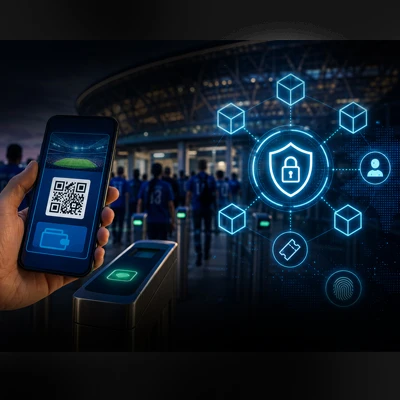
The Ticket Is No Longer a Ticket—It's a Digital Identity
For decades, a sports ticket served one purpose: granting entry into a stadium. Today, that role has fundamentally changed.
Modern sporting venues are transforming into intelligent entertainment ecosystems where every fan interaction—from purchasing a ticket to buying merchandise or receiving personalized offers—is driven by data. In this environment, the ticket has evolved into a secure digital identity that connects fans, venues, sponsors, and event organizers through a single technology platform.
This shift is fueled by three converging innovations:
- Mobile Ticketing
- Blockchain Ticketing
- Contactless Ticketing
Rather than simply replacing paper tickets with QR codes, these technologies are redesigning how stadiums manage security, revenue, crowd movement, fan engagement, and operational intelligence.
The next generation of digital ticketing systems for stadiums is no longer viewed as an operational necessity—it has become a strategic asset that directly impacts profitability and fan satisfaction.
The New Economics of Stadium Entry
Sports organizations have invested billions in modern arenas equipped with giant LED displays, cashless concessions, smart parking, and connected fan experiences.
Yet many venues continued relying on ticketing infrastructures built around traditional barcode validation.
This created numerous problems:
- Ticket duplication
- Unauthorized resale
- Long entrance queues
- Counterfeit tickets
- Identity verification challenges
- Limited fan data
- Poor integration with stadium services
Today, these challenges are addressed through intelligent secure event ticketing platforms capable of connecting ticket sales, access control, security operations, and customer engagement into one unified ecosystem.
Instead of viewing ticket validation as an isolated checkpoint, venues increasingly see entry management as the first interaction in the overall fan journey.
Mobile Ticketing Has Become the Front Door of the Stadium
The rise of Mobile Ticketing represents far more than replacing printed tickets with smartphone screens.
Modern mobile entry technology for sports venues integrates multiple digital capabilities into a single access credential.
These include:
- Digital identity verification
- Seat authentication
- Parking access
- VIP lounge permissions
- Loyalty rewards
- Food ordering privileges
- Merchandise discounts
- Real-time event notifications
A mobile ticket now functions like a personalized digital pass that travels with the fan throughout the venue.
This creates a continuous digital relationship instead of a one-time transaction.
For venue operators, every interaction generates valuable operational insights without adding friction to the customer experience.
Stadium Entry Is Becoming Frictionless
One of the largest operational costs during major sporting events is crowd management.
Thousands of fans arriving within a narrow time window create bottle necks that affect:
- Security
- Staffing
- Parking
- Fan satisfaction
- Retail revenue
Modern Contactless Ticketing addresses this challenge by combining:
- QR authentication
- NFC technology
- Mobile wallets
- Biometric verification
- Dynamic ticket validation
Rather than stopping at multiple checkpoints, fans move continuously through intelligent access gates.
Many stadiums are beginning to deploy mobile entry solutions for seamless stadium access that reduce validation times from several seconds to less than one second per visitor.
Across an entire venue, this translates into dramatically shorter queues and improved crowd distribution before kickoff.
Why Blockchain Is Entering the Ticketing Industry
Ticket fraud has become one of the biggest financial threats facing sports organizations.
Counterfeit tickets, duplicated QR codes, unauthorized resellers, and fake secondary marketplaces collectively cost the industry millions every year.
Traditional ticket databases remain vulnerable because ownership records can often be altered or duplicated within centralized systems.
This is where Blockchain Ticketing changes the equation.
Unlike conventional databases, blockchain creates an immutable ledger where every ticket transaction is permanently recorded.
Ownership history becomes transparent.
Transfers become traceable.
Unauthorized duplication becomes nearly impossible.
This makes blockchain-based ticketing solutions particularly attractive for high-demand sporting events where ticket fraud is common.
Fraud Prevention Is Moving Beyond QR Codes
Most counterfeit tickets today successfully imitate legitimate QR codes.
The problem isn't scanning the code.
The problem is determining whether the scanned ticket remains the genuine owner at the exact moment of entry.
Modern blockchain ticketing technology for fraud prevention in live events introduces dynamic ownership verification.
Instead of validating only the barcode, systems validate:
- Ownership history
- Transfer legitimacy
- Time of transfer
- Identity verification
- Smart contract authorization
As a result, fraudulent resale becomes significantly more difficult.
Every legitimate ownership transfer leaves an auditable digital trail that security teams can verify instantly.
Smart Contracts Are Quietly Changing Ticket Sales
One of blockchain's most valuable capabilities lies in programmable smart contracts.
These automated agreements can enforce ticketing rules without manual intervention.
For example, organizers can automatically:
- Limit resale prices
- Restrict ticket transfers
- Prevent scalping
- Release tickets in phases
- Verify season pass holders
- Enable VIP upgrades
- Share revenue between stakeholders
Instead of relying solely on marketplace policies, ticket behavior becomes embedded directly into the digital asset itself.
This creates a fairer ticketing ecosystem for fans while protecting event organizers from revenue leakage.
Data Is Becoming the Most Valuable Ticketing Asset
Historically, ticket sales ended once fans entered the venue.
Today, every digital interaction provides actionable intelligence.
Advanced digital ticketing systems with blockchain for sports venues allow operators to understand:
- Arrival patterns
- Gate utilization
- Fan movement
- Attendance behavior
- Concession spending
- Merchandise purchasing
- Premium seating usage
- Repeat visitor frequency
This transforms ticketing into a continuous analytics platform rather than a simple access system.
Venue managers can optimize staffing, reduce congestion, and personalize fan experiences using real-time operational data.
Personalized Fan Journeys Begin before Kickoff
Today's sports fans expect personalized digital experiences similar to those offered by airlines, hotels, and streaming platforms.
Ticketing platforms increasingly deliver customized experiences including:
- Preferred entrance recommendations
- Parking guidance
- Seat upgrades
- Exclusive merchandise offers
- Team-specific promotions
- Loyalty rewards
- Food discounts
- Personalized notifications
Rather than overwhelming visitors with generic marketing, intelligent ticketing systems tailor communication according to individual preferences and historical behavior.
The result is higher engagement without increasing operational complexity.
Digital Ticketing Is Becoming Part of Smart Stadium Ecosystems
Sports venues are rapidly integrating ticketing with broader smart stadium infrastructure.
Instead of operating independently, ticketing platforms now communicate with:
- Security management systems
- Video surveillance
- Parking management
- Access control
- Digital signage
- Cashless payment systems
- Hospitality platforms
- Emergency response systems
This integration enables venues to respond dynamically during live events.
For example, if one entrance becomes congested, mobile ticketing applications can automatically redirect arriving fans to alternative gates.
Such operational intelligence was nearly impossible with traditional ticketing systems.
The Secondary Ticket Market Is Being Reimagined
Secondary ticket markets have long created tension between fans and event organizers.
Scalpers often purchase tickets in bulk before reselling them at inflated prices.
Blockchain introduces a more transparent alternative.
Using programmable ownership rules, venues can:
- Cap resale prices
- Restrict resale windows
- Verify legitimate buyers
- Prevent automated purchasing bots
- Track every ownership transfer
This creates healthier marketplaces while preserving fan trust.
Rather than eliminating resale, blockchain makes it accountable.
Cybersecurity Has Become Part of Venue Management
As ticketing becomes increasingly digital, cybersecurity emerges as a critical operational concern.
Modern secure event ticketing platforms employ multiple protection layers including:
- Multi-factor authentication
- Tokenized credentials
- End-to-end encryption
- Behavioral analytics
- AI-powered fraud detection
- Blockchain verification
- Device authentication
These technologies work together to reduce account takeovers, credential theft, and unauthorized ticket transfers.
For venues hosting international tournaments or championship events, robust cybersecurity is now as important as physical security.
Sustainability Benefits Are Often Overlooked
Digital ticketing also contributes to broader sustainability initiatives.
Eliminating printed tickets reduces:
- Paper consumption
- Plastic card production
- Ink usage
- Shipping logistics
- Waste generation
Additionally, mobile-first ticketing minimizes customer service requirements associated with lost or damaged tickets.
For venues pursuing ESG goals, digital transformation supports both operational efficiency and environmental responsibility.
Looking Ahead: The Stadium Ticket of 2035
The future of stadium access will extend far beyond QR codes.
Emerging technologies are expected to introduce:
- AI-driven identity verification
- Digital wallets linked to fan memberships
- Wearable entry credentials
- Biometric authentication
- Blockchain-powered loyalty ecosystems
- Dynamic ticket pricing based on venue occupancy
- Predictive crowd management
- Cross-event digital memberships
In this future, fans may never consciously "show" a ticket at all.
Their verified digital identity will automatically authenticate access, personalize experiences, and enable seamless movement throughout the venue.
The ticket will become invisible—but far more intelligent.
Conclusion
Sports venues are entering a new era where ticketing is no longer an isolated operational function but the digital foundation of the entire fan experience. Mobile Ticketing, Contactless Ticketing, and Blockchain Ticketing are collectively redefining how fans purchase, transfer, and use tickets while giving venue operators unprecedented visibility into security, crowd management, and customer engagement.
The adoption of digital ticketing systems for stadiums, blockchain-based ticketing solutions, and mobile entry technology for sports venues is helping organizations combat fraud, streamline entry, and unlock valuable data-driven insights. At the same time, secure event ticketing platforms and blockchain ticketing technology for fraud prevention in live events are building greater trust among fans by ensuring authenticity and transparency throughout the ticket lifecycle.
Ultimately, the most successful sports venues will not be those with the largest seating capacity, but those capable of delivering secure, frictionless, and highly personalized experiences from the moment a fan purchases a ticket until long after the final whistle. Digital ticketing has become much more than a gateway—it is now the intelligent backbone of the modern sports venue ecosystem.
 Media Pack Download
 Newsletters
 Industrial Events