
Connected Fitness Equipment: The Future of Training in Sports Facilities
Every coach can spot a tired athlete. Almost none can spot an injury that is still weeks away. Effort is visible; risk, for the most part, is not, and that blind spot is exactly what connected fitness equipment was built to close.
The short answer: connected fitness equipment is gym equipment fitted with sensors and software. It records every rep, load, speed and heartbeat, then delivers that data to coaches and athletes in real time. For sports facilities, that means measurable progress instead of guesswork, earlier warning of injury risk, and athletes who stay motivated because they can see their own improvement.
That gap is why the technology has moved from novelty to necessity. If you run a school, academy, club or training centre, the question is no longer whether data belongs in the gym, but how to bring it in sensibly. What follows is a clear-eyed look at what connected fitness technology really does, where it pays off, and how to choose smart gym equipment solutions without wasting your budget.
What Is Connected Fitness Equipment?
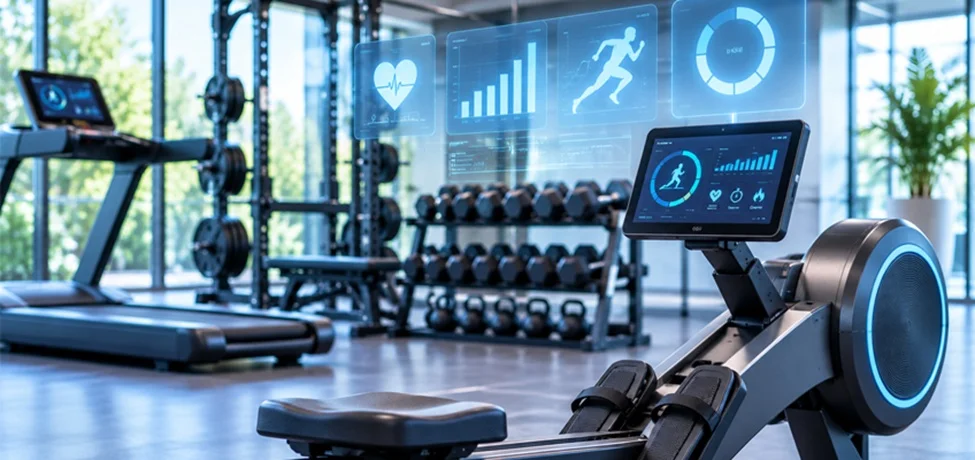
Connected fitness equipment is any gym machine, rack, bike, treadmill or free-weight tool that collects performance data and shares it digitally. Think of a regular rowing machine, then add sensors, a screen, cloud software and a mobile app. That's the whole idea.
You'll see it called smart fitness equipment, connected gym equipment, or digital fitness equipment. The names differ, but the core is the same: equipment that talks to people and to other systems.
Here's what usually sits inside a connected setup:
- Sensors that track load, reps, range of motion, speed, power and heart rate
- A cloud platform that stores each athlete's history in one place
- Dashboards and apps where coaches, trainers and athletes see the numbers
- Integrations with wearables, athlete management tools and facility software
In short, sports facility technology has moved from "the gym is a room with weights" to "the gym is a data source."
How Connected Fitness Equipment Improves Training in Sports Facilities
This is the question most facility managers ask first, so here are the five biggest ways it helps.
1. Training decisions are based on data, not hunches
A coach watching twenty athletes can't track every set. Connected gym equipment does it automatically. Bar speed, power output and rep quality are logged without anyone holding a clipboard, so programming changes come from evidence.
2. Progress becomes visible
Athletes stay motivated when they can see improvement. A sprinter who watches her leg-press power climb week after week trains differently from one who just "feels stronger." Visible progress builds consistency, and consistency is where results come from.
3. Injury risk is easier to spot
Smart gym equipment solutions can flag uneven left-right output, a sudden drop in speed, or a form change under fatigue. None of this replaces a physio or coach. It simply gives them an early warning they would otherwise miss.
4. Training is personalized at scale
A cricket academy, a football club and a school athletics team all train differently. Connected fitness technology stores each athlete's profile, so loads and targets adjust to the person, not to the group average.
5. Your facility runs smarter
Usage data shows which equipment is busy at which hour, what needs maintenance, and what nobody touches. That helps you schedule sessions, plan upgrades and justify spending to management or parents with real numbers.
Connected Fitness Equipment for Sports Facilities: Where It Works Best
The technology isn't one-size-fits-all. Here is how different facilities use it.
School and college sports complexes. Physical education staff can track fitness across hundreds of students. Scholarship and selection decisions get backed by measurable data instead of opinion.
Elite and professional training centres. Coaches monitor workload daily and adjust before fatigue turns into injury. Return-to-play after surgery or injury can be tracked rep by rep.
Sports academies and clubs. Parents and young athletes receive progress reports. That transparency builds trust, and trust helps with retention and enrolments.
Rehabilitation and performance clinics. Therapists compare strength on each side of the body and show patients proof that recovery is on track, which keeps people committed to the plan.
Multi-sport public facilities. Digital fitness equipment lets one gym serve many users, with each person's profile loading in seconds.
What to Look for in Smart Gym Equipment Solutions
Before you sign a purchase order, check these six things. A shiny screen means little if the system doesn't fit how your team trains.
|
What to check |
Why it matters |
Question to ask the vendor |
|
Data accuracy |
Bad data leads to bad decisions |
How are sensors calibrated and validated? |
|
Integration |
Your tools should work together |
Does it connect to our wearables and athlete software? |
|
Ease of use |
Coaches won't use what's confusing |
Can a new user log in and train in under two minutes? |
|
Data ownership and privacy |
Athlete data is sensitive, often involving minors |
Who owns the data, and where is it stored? |
|
Durability and support |
Facilities see heavy daily use |
What do warranty, servicing and spare parts look like locally? |
|
Scalability |
Your needs will grow |
Can we add machines or users without replacing the system? |
A practical tip: ask for a pilot. Put two or three connected machines in your busiest zone for a month and see whether coaches and athletes actually use them.
The Honest Challenges
Connected fitness equipment isn't magic, and it's worth being upfront about the trade-offs.
- Cost. Smart equipment usually costs more than traditional machines. Start with high-impact zones rather than a full replacement.
- Data overload. Numbers only help if someone interprets them. Budget time to train your coaches.
- Privacy. Performance and health data need proper consent and security, especially for young athletes.
- Connectivity. Patchy Wi-Fi can break the experience. Check your network first.
None of these is a dealbreaker. They're planning items, and facilities that plan for them get far more value from their investment.
What's Next for Sports Facility Technology
The direction is fairly clear, even if the pace varies.
- AI-assisted coaching: software that suggests load changes and flags unusual patterns, with the coach making the final call
- Wearable and equipment fusion: sleep, recovery and training load in one view
- Computer-vision form feedback: cameras that check technique without extra hardware on the athlete
- Remote and hybrid training: athletes continue programs at home while coaches track them from the facility
- Sustainability: some equipment now captures the energy athletes produce, which suits facilities with green goals
The facilities that start small now will adapt more easily than those that wait for a perfect moment.
Frequently Asked Questions
What is connected fitness equipment?
It is gym equipment fitted with sensors and software that records workout data and shares it with coaches and athletes through apps or dashboards.
How does connected fitness technology improve athletic performance?
It shows objective measures such as power, speed and symmetry, so coaches can adjust training precisely and athletes can see real progress.
Is smart gym equipment worth it for a small sports facility?
Often yes, if you start small. A few connected machines in your busiest zone can show value before you commit to a larger rollout.
What's the difference between smart and traditional gym equipment?
Traditional equipment does its mechanical job. Smart equipment also measures, stores and reports your performance.
Can connected gym equipment help prevent injuries?
It can help flag warning signs like left-right imbalance or declining speed, but it supports professional judgment rather than replacing it.
Is athlete data safe on connected fitness platforms?
That depends on the vendor. Ask about encryption, consent, data ownership and local regulations before buying.
Final Thoughts
Connected fitness equipment won't build champions on its own. Coaches, athletes and good habits still do that. What the technology does is remove guesswork, so effort goes where it counts.
If you manage a sports facility, begin with one question: what do we wish we could see about our athletes' training that we can't see today? Let that answer guide your first smart fitness equipment purchase.
 Media Pack Download
 Newsletters
 Industrial Events