
Cloud-Based Venue Management Systems: The New Game Changer

Introduction: The Shift toward Intelligent Sports Infrastructure
The sports arenas are no longer places, in reality where matches and concerts occur. Modern arenas and stadiums are dynamic business environments capable of integrating ticketing, security, concession, maintenance, sponsorship activation, broadcast coordination and fan engagement into a unified operation process. With increased venue operations, the conventional tools and disjointed systems are not satisfactory.
With the advent of cloud based venue management system, the planning, execution and optimization of events have in essence changed in the way that operators organize, manage and streamline events. In the case of the B2B stakeholders including stadium owners, facility managers, technology providers, and sports franchise managers, cloud-based applications are no longer welcomed as optional enhancements but as a necessity.
This article discusses the reasons why sports facilities are adopting cloud platforms, their comparability to legacy, and how they facilitate digital transformation to the operations of sports venues on single- and multi-location portfolios.
Understanding Cloud-Based Venue Management Systems
Cloud based venue management system refers to a centralized digital platform, which is hosted on remote servers and is used to allow stadiums and arenas to schedule, operate, maintain, secure, finance and coordinate events in real time. Cloud platforms are available at any location unlike the traditional software, which is installed on local servers, provides automatic upkeep and expands with the demand.
Practically, these platforms are used as integrated command centres. Their linkage of departments that have traditionally differed in their silos enables event managers, facilities teams, marketing departments, and executive leadership to have access to synchronized data.
In the case of the stadiums, that is to say that the venue management software can handle stadium-wide ticket scans, concessions stock, security alerts, schedules, and maintenance operations at once. The transformation between reactive management operations to proactive and evidence-based management is a significant stride towards delivering management in venues.
Why Sports Venues Are Moving to Cloud Management Platforms
The need to migrate sports venues to cloud management platforms is best addressed by exploring the areas of operational pressure.
Stadium operators have to deal with changeable event times, excessive expenses in maintenance, escalating security needs and demands and rising expectations over fans. The old on-premise systems are hard to scale, access remotely and integrate into the third party services. Cloud solutions, in their turn, are elastic, centralized data access, and API-based connectivity.
The new sports arena event management proposes to logisticalize the entire event starting with the training camp to international championships. Live dashboards, automated reporting, and remote working tools enable operators to respond to the last-minute schedule change or security change.
In addition, cloud systems allow continuous innovation. Since the vendors are introducing new features like predictive maintenance analytics or AI-based crowd flow models, the venues can integrate them without hardware upgrades. It is one of the main advantages of cloud based venue management to the stadium operators who want to remain competitive in the long run.
Cloud vs. On Premise Venue Management Systems
In comparing the cloud and on premise venue management system, a decision-maker is bound to factor in the cost system, scalability, security, and the maintenance task.
On-premise systems demand substantial initial capital investment in servers, hardware, IT staff as well as regular maintenance. Modifications are usually accompanied with downtimes and extra investments. Internal networks may only permit access to the data and external teams may not be flexible.
Cloud based platforms on the other hand are subscription based. The infrastructure prices are subsidized, upgrades are automatic and accessibility when remote is the norm. In case of an organization that handles geographically spread venues, the capability to monitor operations on a dashboard is measurably efficient.
The security issues that existed as an obstacle to the adoption of clouds have been addressed to a large extent by encrypting enterprises, the use of role based access controls and compliance certification. The market currently has numerous vendors of smart stadium cloud infrastructure solutions that are of the high quality in regulatory and cybersecurity standards.
Cloud systems often have a better ROI in terms of less hardware investment and more operational visibility than a significant cost of ownership.
Stadium Facility Management Software in the Cloud
Cloud solutions of modern stadium facility management software do not limit their services to event scheduling. They combine asset management, maintenance control, energy management and compliance reporting.
As an example, IoT-enabled monitoring can be performed with the HVAC systems, lighting arrays, turf irrigation systems, and escalators. It is possible to automatically generate alerts once performance thresholds are reached. This proactive strategy minimizes the downtime on high profile events.
Vendor coordination is also supported by cloud-based systems. Work orders can be sent to the maintenance contractor electronically, completion reports uploaded and history of services followed at the same platform.
The centralization of the facility data would provide the stadium operators with actionable information on cost optimization, resource allocation, and lifecycle management of the main infrastructure.
Multi Venue Management Software for Sports Complexes
Big sports institutions usually have more than a single facility. There are several logistical challenges when managing various stadiums, training grounds and indoor halls.
Sports complex multi venue management software allows sports complex operators to standardize operations across locations. One dashboard may visualize occupancy rates, maintenance schedules, revenue, and security alerts of all the venues.
This single management is a response to the question of operation on how to operate multiple sports venues under a single platform. Centralized governance enables leadership teams to evaluate facility performance measures against each other and duplicate best practices.
There are also mutual vendor contracts, consolidated reporting and coordinated staffing to manage. In the case of enterprises having regional or international portfolios, cloud solutions offer a common operational control without the need to reproduce infrastructure in every location.
Driving Digital Transformation for Sports Venue Operations
The concept of digital transformation of sports venue operations is not as narrow as technological use. It deals with data-driven decision making, process reengineering and cultural change.
This transformation is based on cloud platforms as the basis of infrastructure. They allow advanced analytics, real-time data visualization and connectivity to ticketing systems, CRM tools and mobile fan engagement apps.
Foot traffic patterns can help operators to maximize concessions placements. Making the past incident reports available to security teams, they can optimize the strategies to manage crowds. Revenue streams are event-specific and can be measured by the marketing departments in a granular way.
Cloud systems remove information silos by uniting the data between departments and assist in strategic planning. This combined visibility enables venues to be agile and performance-driven businesses.
Smart Stadium Cloud Infrastructure Solutions
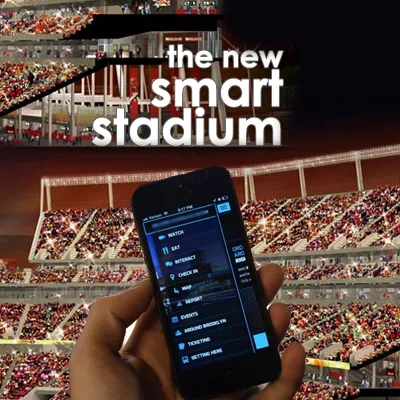
Smart stadium cloud infrastructure solutions play a fundamental role in the implementation of the concept of smart stadium. The systems combine IoT gadgets, artificial intelligence analytics, and real-time communication networks to empower efficiency of operations and fan experience.
Occupancy can be monitored by sensors installed in seating sections. Crowd density can be analyzed by using smart cameras. Digital signage may be dynamic depending on the time of events. All these data are fed into cloud platforms where information is aggregated and processed as it is being fed.
The outcome is a predictive decisions capable of being made by a stadium ecosystem. Low attendance events can be used to optimize the use of energy. There is an automatic escalation of security alerts. Maintenance teams are able to prevent interruption in the operations during equipment failures.
Cloud-based smart infrastructure is what it takes to make venues adaptive environments that react proactively to the needs of the operation.
Benefits of Cloud Based Venue Management for Stadium Operators
Cost savings are not the only advantages of cloud based venue management to the operators of stadiums.
To begin with, scalability enables venues to cater to seasonal demand changes. Computing resources can automatically increase during the large tournament.
Second, the remote accessibility will enable the executives and partners to access the performance metrics anywhere. This is especially beneficial to the organizations that are dealing with international events.
Third, automated changes are used to assure the adherence to regulatory requirements and cybersecurity measures.
Fourth, centralization of data improves transparency and accountability within the departments.
Lastly, the ability to integrate means that a venue can link to third party ticketing, broadcasting and sponsorship systems without the need to carry out a thorough level of personalization.
All these benefits make cloud systems strategic, as opposed to operational resources.
Industry Implementation Roadmap
Implementation by an organization that is thinking of transition should take a roadmap.
The initial stage is the operational assessment. Stakeholders are to detect the current pain points, redundancy, and integration needs of the system.
The other stage is on vendor assessment. Scalability, security certification, API functionality and customer support infrastructure should be evaluated by the decision-makers.
The third stage is the transitional migration. Basic modules like scheduling and maintenance can also be migrated first and then more complicated modules like analytics and integration of the IoT.
The last stage focuses on training the staff and management of change. Adoption should be successful and this involves matching technology and workforce readiness.
A planned implementation will guarantee a smaller impact and high ROI.
Addressing Common Concerns
Some operators are however wary despite the rampant application. The issues always include the security of data, a risk of downtime, and dependence on vendors.
The major cloud providers solve these problems by introducing multi-layer encryption, redundant data centers and service level agreement which ensures uptimes.
Secondly, the provisions of data portability can be added in contractual frameworks, which guarantees that the ownership of operational data lies with the venue.
The higher the maturity level of technology the greater the perceived risks will be overshadowed by quantifiable benefits in operations.
Frequently Asked Questions
What differentiates a cloud based venue management system from traditional tools?
Cloud systems work with remote servers, are real-time accessible, and scale in a dynamically accessed manner without being dependent on local hardware.
Is venue management software for stadiums suitable for smaller arenas?
Yes, subscriptions can enable more high-level tools to be available to mid-sized and regional facilities.
How does a sports arena event management system improve fan experience?
It also works together with ticketing, security, and concessions along with digital engagement to create a single platform, which decreases friction at the events.
What are the key advantages of cloud vs on premise venue management systems?
Cloud solutions are cheaper in initial expenditure, scalability, remote access and updates.
Can multi venue management software for sports complexes handle international operations?
Yes, centralized dashboards provide a global control with the local operational control.
The Strategic Future of Venue Operations
With the sports entertainment industry becoming more and more data driven, there will be increased complexity in the demand of the integrated, scalable, and intelligent systems. Cloud platforms are not just technological upgrades they are a complete change in the way venues are run as business entities.
The capacity to schedule, maintain, provide security, analytics, and engage fans through a centralized platform is transforming the way things are done.
The capabilities of smart stadium cloud infrastructure solution will be augmented further in the coming years by artificial intelligence, predictive analytics, and more integration into IoT. Stadia that respond to such a transformation will be able to achieve competitive edge in terms of efficiency, profitability and satisfaction among fans.
To the B2B decision-maker, the shift towards cloud based venue management system is more of a strategic certainty than a trial. With the growing pace of the digital transformation, cloud management systems become the cornerstone of the new generation of sports venue management.
 Media Pack Download
 Newsletters
 Industrial Events