
Smart Sports Equipment and Surfaces: How Data-Driven Gear Is Transforming Team Performance
In the contemporary competitive sporting world, in many cases, the outcome is based on the data. With the ability to monitor heart rates to real-time biomechanical analysis of data, data-driven sports equipment has become the coach that will never sleep. However, what is the way these innovations are transforming the future of team performance? The solution is in the emergence of intelligent sports equipment used by athletes, which runs on the IoT, AI, and intelligent surface solutions.
The Evolution of Smart Sports: From Intuition to Information
At some point, athletes used to depend only on instinct, experience and human coaching to enhance performance. The sports field today has become a digital ecosystem, and sports equipment based on IoT captures every movement, and sports analytics built on artificial intelligence deciphers every millisecond of action. Information is replacing intuition and it is redefining the training, strategy, and competitive nature of teams.
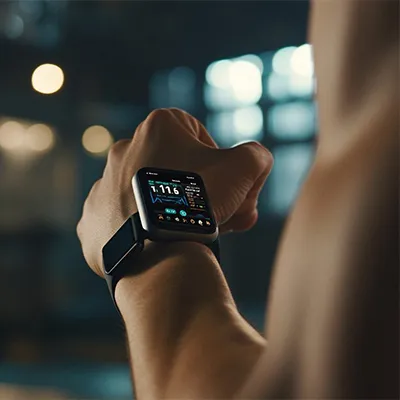
With the increasing use of wearable technology in sports - smartwatches and connected jerseys, AI-enabled footwear, and others - the task of monitoring and improving athletic performance has undergone a revolution. This trend is no longer being confined to exclusive leagues, even college and amateur teams are now relying on performance tracking within sports to provide them with tailored plans of improvement.
The Core of Innovation: Data-Driven Sports Equipment
What is unique about data-driven sports equipment then? The solution is that it can work in real-time on the performance data and gather and act upon it. These intelligent devices have inbuilt sensors that track data such as acceleration, power, hydration and impact force. Adding AI platforms means that this information can be used as actionable insight - enabling coaches to make strategies more precise and avoid injuries.
An example of this is smart sports equipment used by sportspeople, including sensor-integrated basketballs, smart soccer boots, and smart cricket bats, which can provide analyzes of all of the passes, shots, or swings. The feedback enables the athletes to know nuances in their technique that could not be detected by the trained human eyes.
The performance optimization of data-driven gear in professional sports is not the only advantage. It is also concerning sustainability, durability and adaptability. There is a possibility of teams anticipating equipment wear and tear, player exhaustion, and even creating individual recovery.
Wearable Technology in Sports: The Athlete’s Digital Companion
The worldwide culture of wearable technology in sports is estimated to pass USD 90 billion by 2030 owing to the innovations that combine comfort with smartness. Nanotech sensors and GPS-enabled wearable-based smart garments are offering real-time physiological information like heart rate variability, oxygen saturation and muscle exertion.
Putting aside the example of a marathon athlete using the IoT-based sporting gear that notifies the trainer when the athlete is dehydrated is something to consider. Or a player in a footballer with data-driven sports devices that provide alerts over injury risk that are produced through gait analysis. These systems are redefining the limits of human potential due to the exactness and the ability to predict.
This is a glimpse of the role which wearable technology in sporting activities is playing in monitoring athletes today:
| Smart Wearable Type | Key Functionality | Impact on Team Performance |
| Smart Jerseys | Track biometrics and player positioning | Enables real-time substitution decisions |
| Connected Shoes | Analyze stride, balance, and speed | Improves running mechanics |
| Sensor-Based Helmets | Detect impact forces | Reduces concussion risk |
| Smart Bands | Monitor vitals and recovery | Personalizes training sessions |
All the devices turn into coaches who never stop learning, adapting, and doing everything possible to be better.
Smart Surfaces for Training: The Unseen Revolution
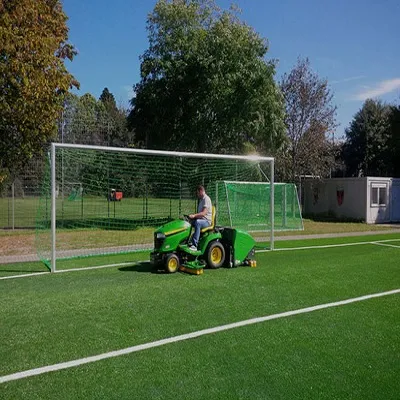
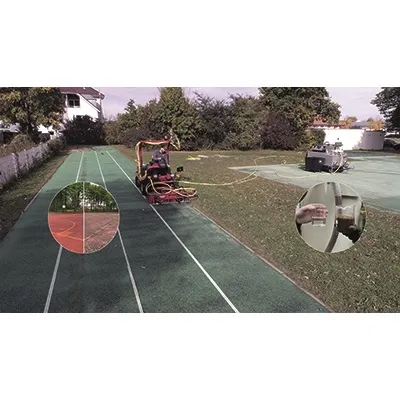
Whereas the majority focus on wearable products, smart training surfaces are taking a relatively low profile as the next performance innovation. They are being used to create interactive data platforms out of regular fields, fields and courts by equipping them with sensors that detect motion and pressure and balance.
An IoT-based basketball court can capture the movements of players, jump heights, and landing patterns since it has a basketball court with IoT-based sports equipment installed on the surface. On the same note, player agility, acceleration and stability could be monitored through smart surfaces on football fields. The information would assist coaches to develop specific exercises that promote accuracy and minimize the risk of injury.
The key aspect of smart surfaces in training athletes is the rehabilitation and performance testing. Pressure-sensitive flooring or smart mats can identify any asymmetry to movements in order to allow physiotherapists to develop corrective exercises. With a new surface and sensors merging, a new level of understanding is provided as teams strive to achieve optimum consistency.
AI-Powered Sports Analytics: Turning Data into Dominance
Arguing and gathering data alone is one thing, but putting them into good use is quite another. The AI-based sports analytics comes in at that point. Raw performance data is processed to turn into tactical intelligence using Artificial Intelligence and machine learning models. AI is currently utilized by the teams to study the fatigue levels of players, estimate the risk of injuries and simulate the situation during a game day.
Sports analytics and data-driven sports gear can then be combined to make coaching personnel realize what is actually important in achieving success. As an example, AI could tell that a player can play 15 percent better when he is not at the center but is a bit left or that hydration rates directly influence final quarter sprint velocity.
Essentially, AI has ceased being an analysis tool - it is a strategic collaborator in sport performance. The technology is also used by the teams to scout, train, and prepare games, and it demonstrates how IoT and AI are helping improve the performance of sports irrespective of the discipline.
How Smart Sports Equipment Improves Team Performance
Team sports are well based on coordination, communication and accuracy. The research question has become - what is the holistic mechanism of how smart sports equipment can enhance the performance of the team?
To begin with, it provides transparency on training outcomes. Athletes and coaches are able to see the progress instantly which builds accountability. Secondly, sport equipment is a solution to the communication divide between science and sport where in decisions they are made on facts and not assumptions.
Moreover, real-time data distribution enables collaborative performance monitoring in sports whereby nutritionists, trainers and psychologists can synchronize their plans on the basis of the identical statistics. The outcome? A more coordinated, powerful, and effective ecosystem of teams.
Professional sports also have the advantages of data-driven gear in terms of mental conditioning. Emotional well-being can be evaluated by the teams with the help of stress markers, evaluation of sleep quality, and variability of heart rate, which is an essential but frequently neglected component of long-term athletic performance excellence.
Examples of Smart Equipment Used in Team Sports
The innovation in the world of smart sports gear among athletes is abundant. There are some spectacular instances of intelligent equipment deployed in team sports, these are:
- Adidas miCoach Smart Ball: Embedded sensors detect kick force, spin and pathway which feeds back via a mobile application.
- Wilson X Connected Basketball: Motion sensors are used to measure the accuracy of tracks shot and the distance.
- Catapult GPS Tracker: In football and rugby, used to measure the speed of sprints and positioning information to use in tactics.
- Zepp Smart Bat: In the case of baseball and cricketing players, it gives the swing analysis and the timing of impact.
- Hawk-Eye System: It is utilized in tennis and cricket to provide accuracy and fairness in the decisions made by combining AI with a number of cameras.
These tools are a good example of how IoT and AI are changing the results of sports by merging real-life action with the virtual intelligence.
Market Insights: The Smart Sports Boom
Sports equipment market is a booming global market that is growing exponentially. According to the latest reports in the industry, the smart sports technology market will have increased by 20 percent or above by 2032. The demand has three major factors namely innovation in technology, the increased awareness of the players and the fascination among the spectators.
| Segment | Market Share (2024) | Projected CAGR (2024–2032) |
| Wearable Devices | 55% | 22% |
| Smart Surfaces | 20% | 18% |
| IoT-Based Equipment | 25% | 24% |
The top competitors such as Nike, Catapult Sports, Garmin, and Adidas are actively developing to incorporate AI-based sports analytics into their products. In the meantime, startups are exploring smart surfaces to train and rehabilitate, which portends to be an exciting stage of professional and grassroots sporting activities.
The Psychological Edge: Confidence through Data
In addition to physical measures, performance monitoring in sports presents psychological empowerment. Athletes should be able to see their progress in numbers because this strengthens the desire to achieve results and self-confidence. Trust based on data is unshaken - since it is based on evidence and not perception.
Smart training devices with the regular improvement curves or fatigue zones can make players train not more but smarter. This psychological confidence usually transpires into better performance on the field - an obscure but far-reaching illustration of how intelligent sports equipment enhances team performance in its entirety.
Challenges and the Road Ahead
Though the future of sports equipment involving the use of the IoT cannot be denied, there are still obstacles. Of concern are data privacy, the expensive nature, and technological reliance. In addition, the implementation of AI-based sports analytics should be harmonized with human judgments, which is yet to be refined. However, the direction is clear.
Nevertheless, the direction is evident. The integration of wearable technology in sports, intelligent surfaces to train, and sports equipment that is based on data will keep transforming the development of sports. Eventually, in the near future, we will also have an AI-based coach, which will come up with custom plans on how the game should be played, depending on the DNA of the players, their emotions, and their environment.
Conclusion: The Smart Future of Team Sports
The advent of data-driven sportswear is the epoch in which the borders between biology and technology are blurred, and the perception of sport excellence is changed radically. The sports industry is also going through a golden age of accuracy, anticipation, and achievement, with such innovations as intelligent athletic equipment and computer-driven sports analytics.
Smart surfaces in the training of the athlete are an aspect that has been disregarded before, but now is central in the establishment of safer, efficient and more intelligent playground. These innovations combined are not only improving the potential of individuals, but they are also orchestrating a group revolution on how teams prepare, plan, and compete.
Essentially, the revolution in sports is not occurring on the score board but in the data that is behind the score board.
 Media Pack Download
 Newsletters
 Industrial Events