
From Cash to Clicks: The App Revolution in Stadium Concessions
The Digital Turning Point in Live Sports Venues
The sports stadiums are not merely places of live entertainment but are being transformed into large-volume digital commerce. With the changing expectations of fans in response to the mobile-first lifestyles, the cash-based concession models are gradually coming to be viewed as slow, inefficient, and capable of generating revenues. This has helped to increase the popularity of the cashless stadiums with mobile apps, QR codes, and built-in digital wallets reshaping the purchasing of food, drinks, and merchandise by fans.
The replacement of the physical money with the app-powered transaction is not just a payment upgrade. It is an indication of a strategic shift at the data-driven revenue optimization, operational efficiency, and improvement of fan experience. To the owners of stadiums, the operators of food and beverages, and the providers of payment technologies, food and beverage concessions are becoming a very vital part of the modernization strategies of the venue.
Why Sports Stadiums Are Going Cashless
Cashless stadiums are a trend that corresponds to a combination of business, economic, and cultural drivers. The dense crowd, limited time slot to hold events and buying spurts during peak time cause jams in standard concession lines. Handling of cash creates delays, complexity in staffing and security risks and also constrain the capability to capture consumer data.
There is a growing expectation of mobile-first interactions by digital-native viewers, especially younger age groups. Customers who have been used to making one- click payments in stores and food delivery have high expectations of the same at stadiums. Stadium digital payments meet these expectations by allowing checkout to be quick and queuing to be reduced as well as offering various ordering touchpoints around the venue.
Business wise, going cashless decreases shrinkage, reconciliation costs are also minimized, and there is increased transaction traceability. All these benefits account for the reason why sports stadiums are becoming cashless in major leagues and types of events throughout the globe.
Defining the Modern Cashless Stadium Ecosystem
A stadium without any cash does not just refer to a place where people stop taking a physical currency. It is a digital commerce ecosystem which integrates cloud-based point of sale platforms, mobile applications, contactless payment infrastructure and real-time data analytics.
Sports stadium mobile ordering is the core of this ecosystem that enables fans to view menus, order, and pay using a specific venue application or a third-party platform. Digital wallets, credit and debit cards, UPI systems or stored-value accounts are generally associated with app based concessions, making stadium digital payments frictionless.
Backend operations that are also related to this ecosystem include inventory operations, kitchen operations, staff optimization, and demand forecasting. The outcome is the unified system in which the fan convenience and the operation brilliance support one another.
How Mobile Ordering Works in Stadiums
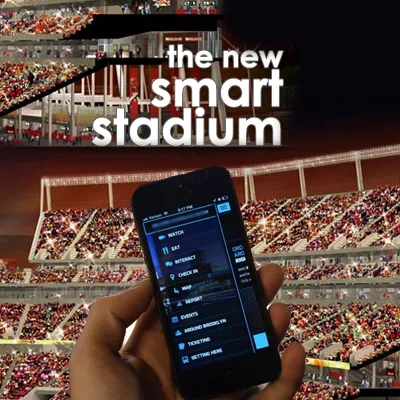
The importance of learning about mobile ordering in the stadiums is essential to the stakeholders considering investing in digital concession. It works by the fans downloading a stadium app through QR codes, Wi-Fi portal, or installed team applications. The fans will be able to access location-specific, availability-specific, and real-time inventory vendor menus once inside the app.
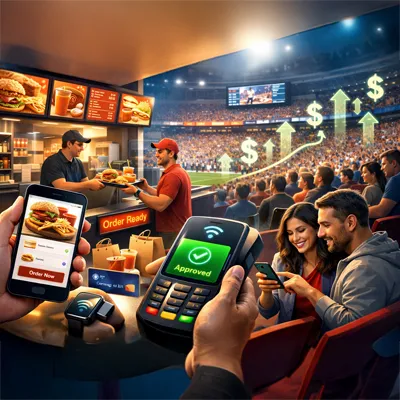
Orders are done online and are directly uploaded to the relevant concession booth or kitchen. The payment is done in the app through digital payment, which is not necessary because it does not involve cash handling in-site. Customers are also notified on when their order is ready, so that they can pick it up at special express lanes, or in certain premium settings, they can have it delivered to their seats.
Operationally, the app based concessions would cut the congestion at physical counters as well as allow the concessionaire to process more volumes with fewer staff. Order errors are also minimized in this model, enhances accuracy of preparation and decreases the fulfillment times.
The Impact of Digital Payments on Stadium Revenue
Digital payment can influence stadium revenue in other ways than the speed of the transactions. There have always been statistics demonstrating that online-based buying experiences stimulate increased per-capita expenditure. When the fans are not bound by physical money or long lines, they tend to include extra items as premium or upgrade the portions or make recurrent purchases at the event.
Another most convincing reason that cashless stadiums are important is that cashless stadiums make fans spend more money due to the behavioral design. Mobile interfaces allow upselling suggestions, package deals and time-bound promotions, which would be hard to implement in the traditional concession context. In-game breaks or half-time discounts can be sent directly to the smartphones of the fans to make impulse purchases.
Digital payments also facilitate dynamic pricing strategies which allow operators to change the offers according to the demand, inventory levels, or phases of the event. With time, these capabilities are reflected on revenue lift and better margin control.
Benefits of App Based Stadium Concessions for Operators
The advantages of the application-based stadium concessions spread to the efficiency of operations, financial results, and the strategic planning. Staffing wise, digital ordering will cut on the number of cashiers and enable the departments to re-distribute the human resources to food preparation and customer service services.
When all transactions are recorded digitally, the visibility of the inventory will improve greatly. The operators have real-time information regarding the velocity of products, optimal demand periods, and the performance of vendors. This information will facilitate smarter purchases and minimise waste especially of perishable goods.
To the owners of the venue, app based concessions are new revenue generating channels in form of sponsorship placements, branded promotions and featured vendor listings on the app interface. These online points-of-contact prolong the selling worth of concessions outside of the physical counter space.
A Comparative Snapshot of Traditional vs App-Based Concessions
| Aspect | Traditional Cash-Based Concessions | App Based Concessions |
| Payment speed | Slower due to cash handling | Faster with digital payments |
| Data visibility | Minimal transaction data | Rich, real-time analytics |
| Upselling capability | Limited | Built-in digital prompts |
| Staffing efficiency | High cashier dependency | Optimized labor allocation |
| Fan experience | Queue-dependent | Queue-free mobile ordering |
This analogy explains why stadium operators are becoming more and more interested in adopting an app as a means of revenue and no longer as a technology cost.
Security, Compliance, and Infrastructure Considerations
As the number of digital payments in stadiums increases, security and compliance become the most important to look at. The payment platforms have to be compliant with the standards of PCI DSS, data protection regulations, and the regional payment standards. Strong encryption, tokenization and fraud detection software are required to ensure fans have confidence.
The preparedness of infrastructures is also very important. The success of mobile ordering initiatives is the presence of reliable Wi-Fi coverage, mobile network capacity, and backend system integration. The major stadiums are investing in redundancy of networks as well as computing at the edges to provide continuous service in times of peak operations.
The technology vendors in this space are also providing modular systems that are easily integrated with POS systems, loyalty programs, and access control systems.
Why Cashless Stadiums Are a Strategic Advantage for the Future
Considering the future, the cashless stadium is a place of advancement of more extensive digital transformations. As stadiums seek smart seating, fan journeys, and AI-powered demand prediction, app based concessions offer a continuous flow of behavioral data which drives innovation.
The intersection between mobile ordering, biometric access, and loyalty ecosystem is going to continue to blur the boundaries between physical and digital fan engagement. Those stadiums that make investments early in scalable digital payment infrastructure are in a position to respond swiftly to new consumer tendencies and revenue models.
The stadium concessions market provides next-generation commerce technology with a high-volume, high-visibility proving ground to B2B stakeholder payments processors, food service companies, and venue management firms.
Executive FAQ: Cashless Stadiums in Practice
The main question that decision-makers posed is whether cashless stadiums would drive away some of the fan segments. The practice is that the majority of venues solve the issue of inclusivity by the use of prepaid cards, on-site digital kiosks, or assisted ordering stations, making them available without returning to handling cash.
The other issue that is shared is on the return on investment. The preliminary establishment costs may be high but overall the combination of higher fan purchasing, reduced operating expenses and additional sponsorship sources usually justify investment in a short period of operation.
Lastly, the stakeholders doubt scalability among the various types of events. The use of app based concessions has demonstrated flexibility in the sports, concerts and big entertainments, and consequently, they have become a multifunction solution in the multi-use venues.
Conclusion: From Transaction to Transformation
Cash to clicks in stadium concessions is here to stay and not a transient fashion but a paradigm shift in the way entertainment events are run and financed. High-density settings are being transformed through stadium mobile ordering, app based concessions and stadium digital payments.
Knowing the mobile ordering process and determining the quantifiable effect of digital payments on stadium revenue, the industry leaders will be able to make sound decisions that will ensure technology investments are matched with the long-term growth goals. With the demands of fans constantly increasing, the question is not whether stadiums should be made cashless, but how fast they can implement the process of digitization in order to remain relevant in an ever more digitalized world.
 Media Pack Download
 Newsletters
 Industrial Events